- Jiuzhaigou – one of China’s Natural Masterpieces
- Leshan – a cornerstone of Chinese Buddhist heritage
- Chengdu – home of pandas and spicy food
- Datong – Carved in Stone, Alive with Spirit
- 5 hotels with character in Jiangxi
- 5 Unique Ancient Villages in Jiangxi’s Wuyuan County
- Jiangxi – a land of mountains, rivers and ancient towns
- Shenzhen – a multi-faceted modern city
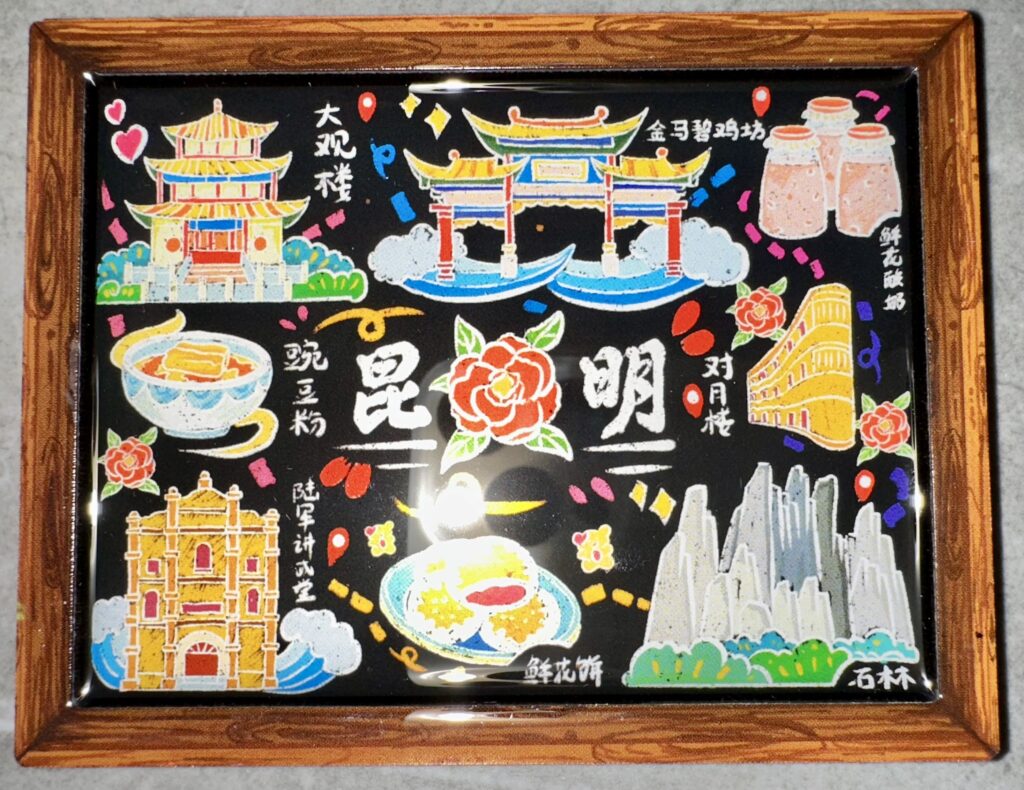
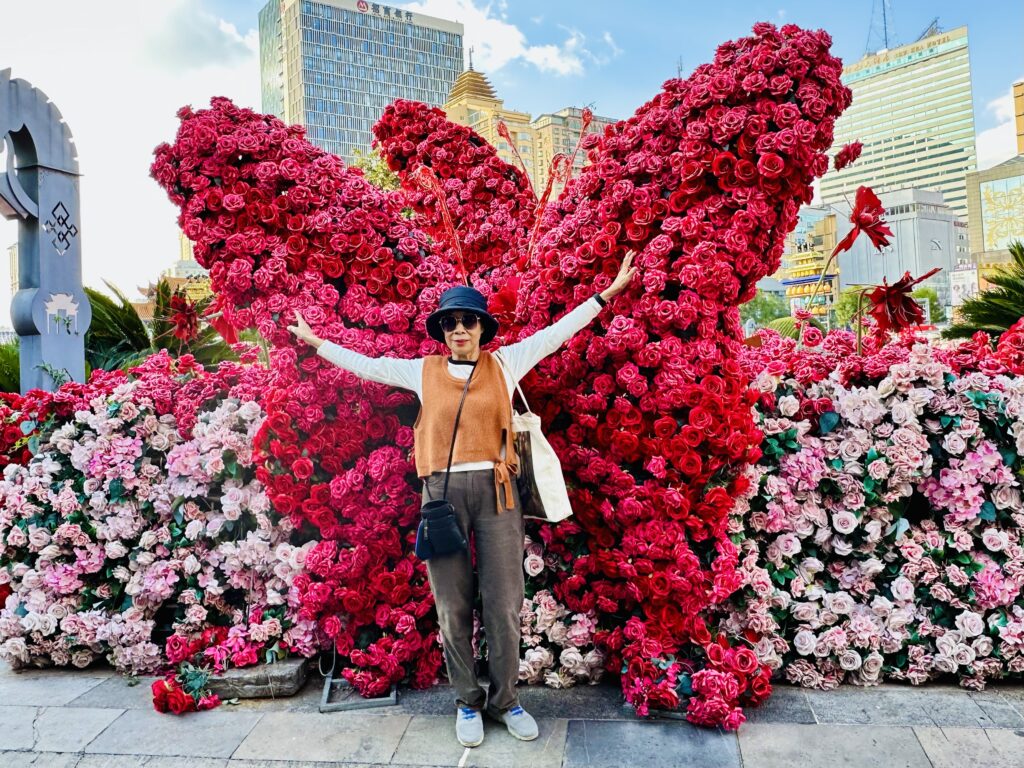
- Kunming – Gateway to Yunnan
- Lijiang – a living ancient town
- Shangri-la – “the closest place to heaven”
- Dali – where nature meets culture
- Inner Mongolia – China’s wild heart
It was an ambitious undertaking for me to organise a 7-day trip to Yunnan province in south west China for me, my sister, my brother and his wife! The trip would take us from Kunming to Lijiang, Shangri-la and Dali and back to Kunming. It turned out to be a diverse experience to be savoured!
Kunming is the gateway to Yunnan. Its unique blend of convenient position, climate, culture, and landscape makes it an ideal place for a stopover. However, there’re many more attractions, such as the Stone Forest, to warrant a longer stay. Regrettably, owing to time constraints, it had to be a fleeting sojourn on this trip.
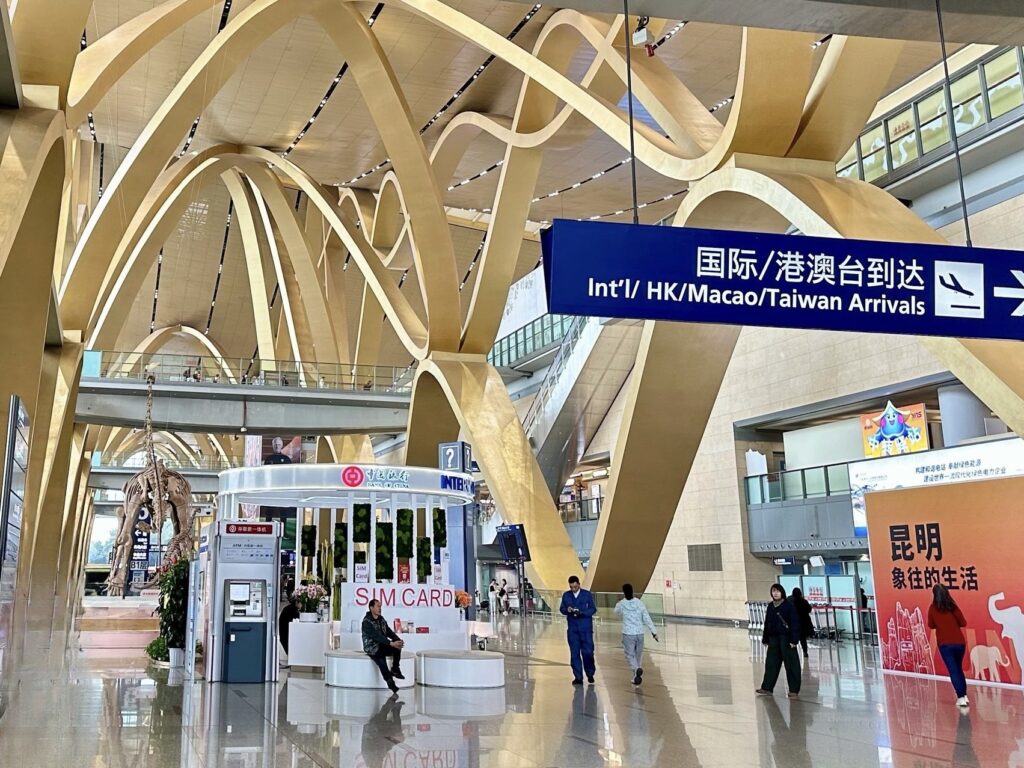
A direct flight from Hong Kong took just over 2 hours. The airport was modern airy and spacious.
Our trip didn’t get off to a great start! And as the organiser, I felt sheepish about it!
For our first night in Kunming, I chose us a hotel in the Chenggong District, to be near Kunming South Station for our early morning train to Lijiang the next day – only to find out that our train would depart from Kunming Station 30 km away! We ended up having to rebook a later train!
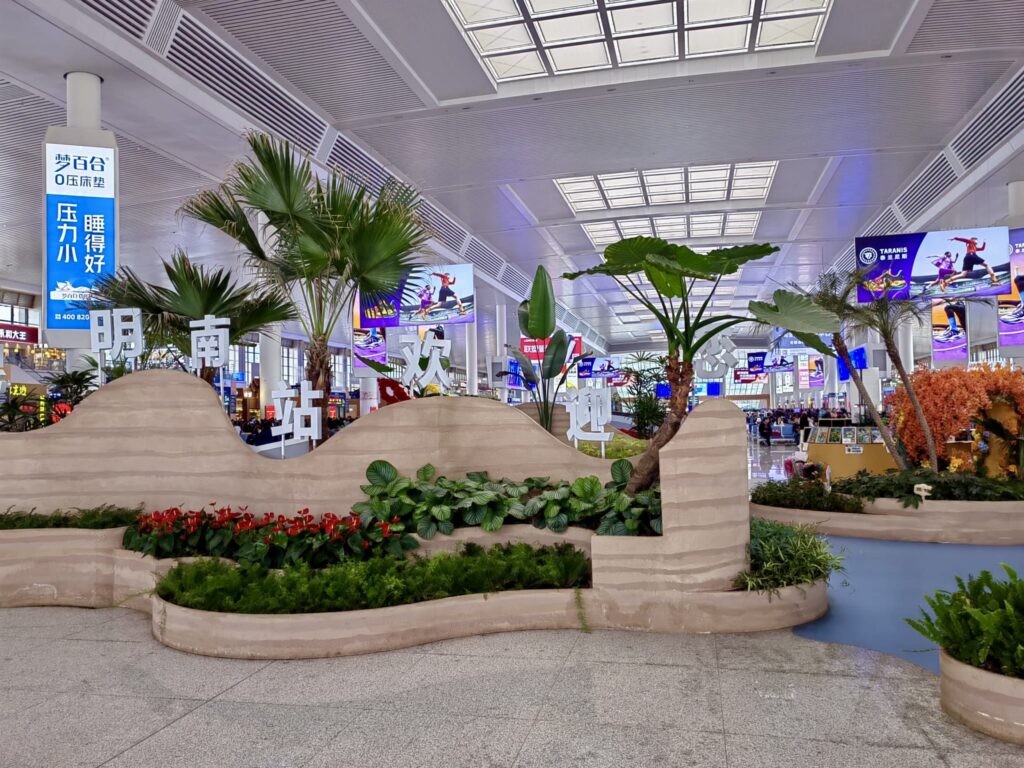
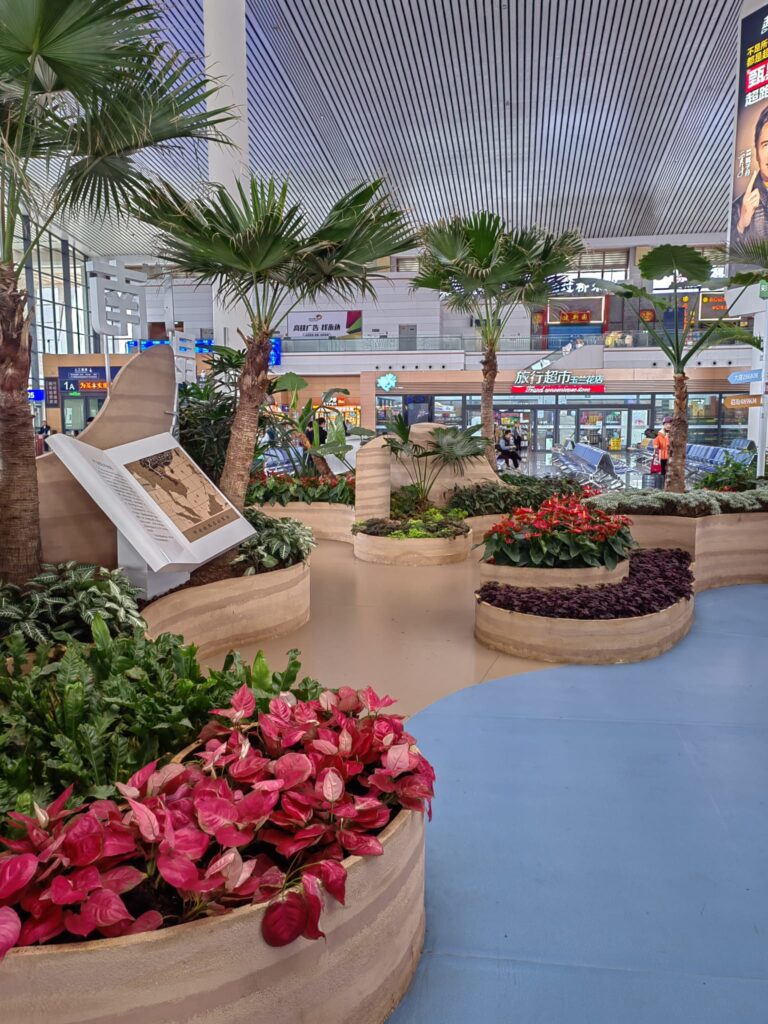
I was mislead into thinking that Kunming South Station was the only station for high speed trains. It’s a sleek spacious station that would put many international airports to shame!
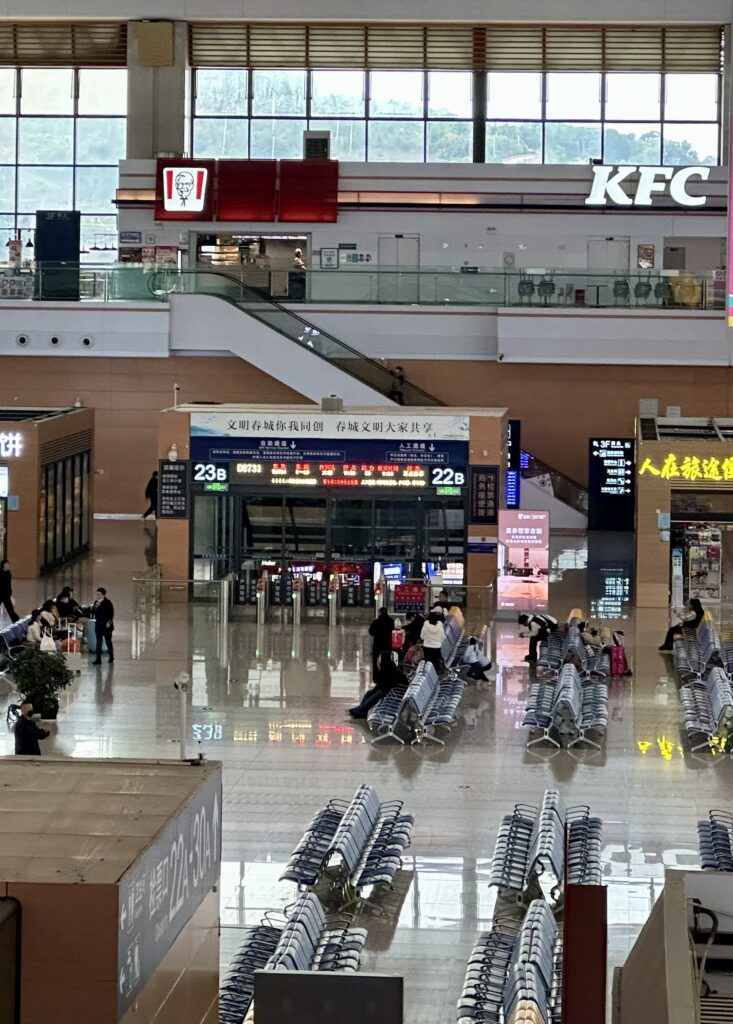
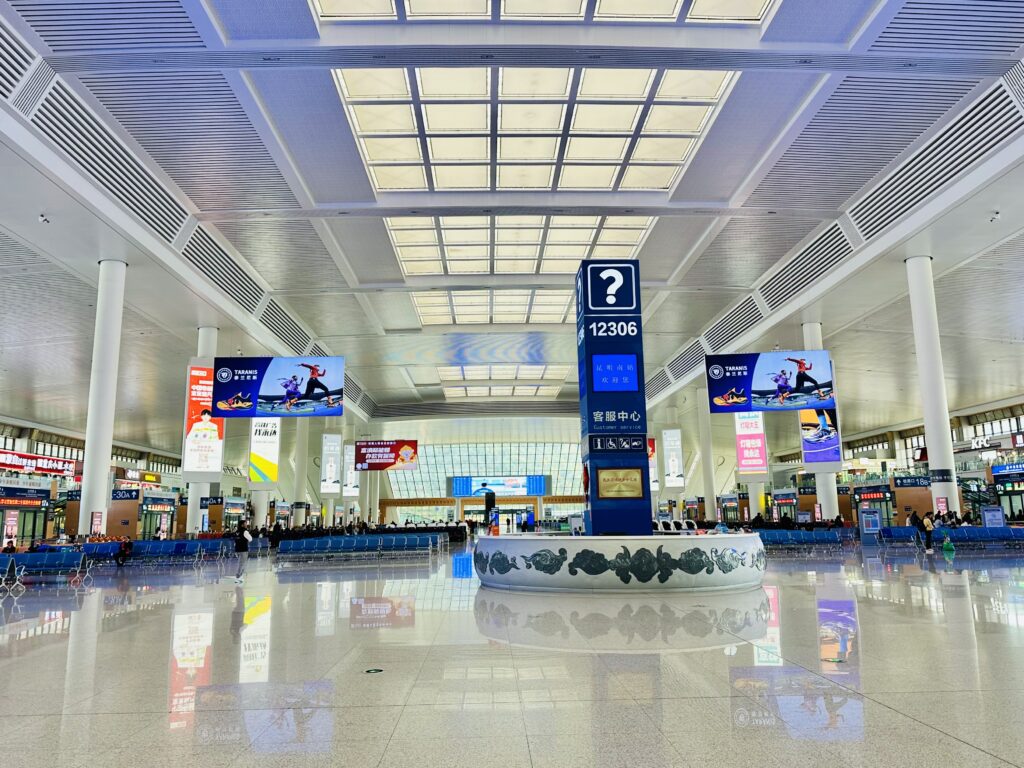
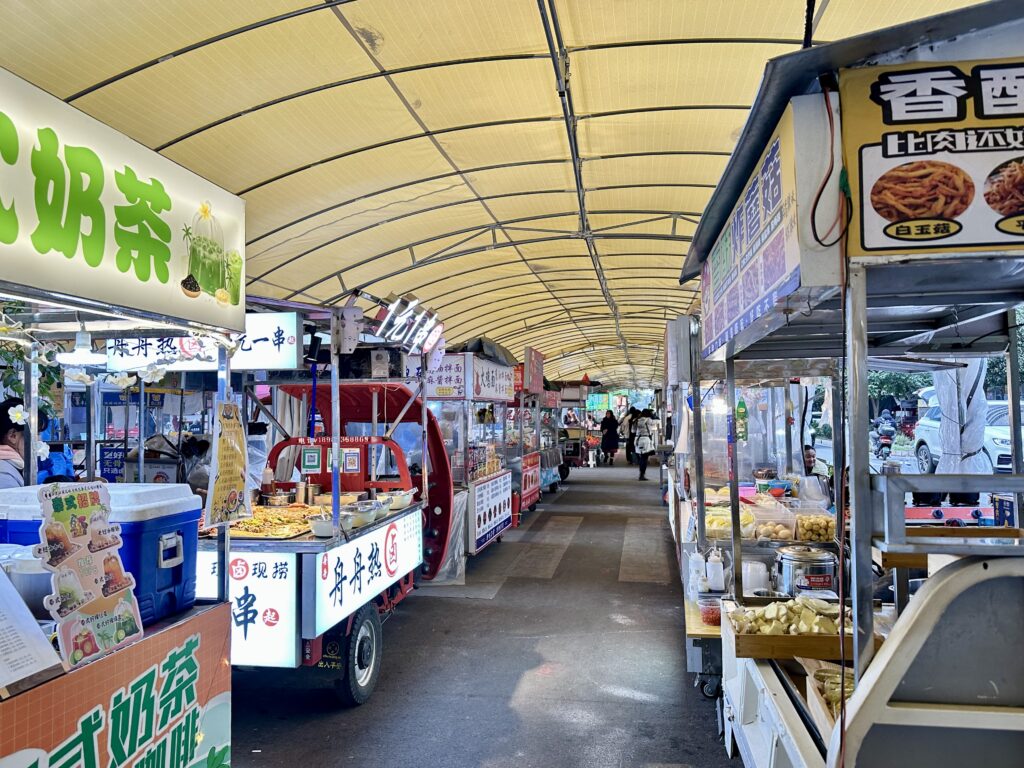
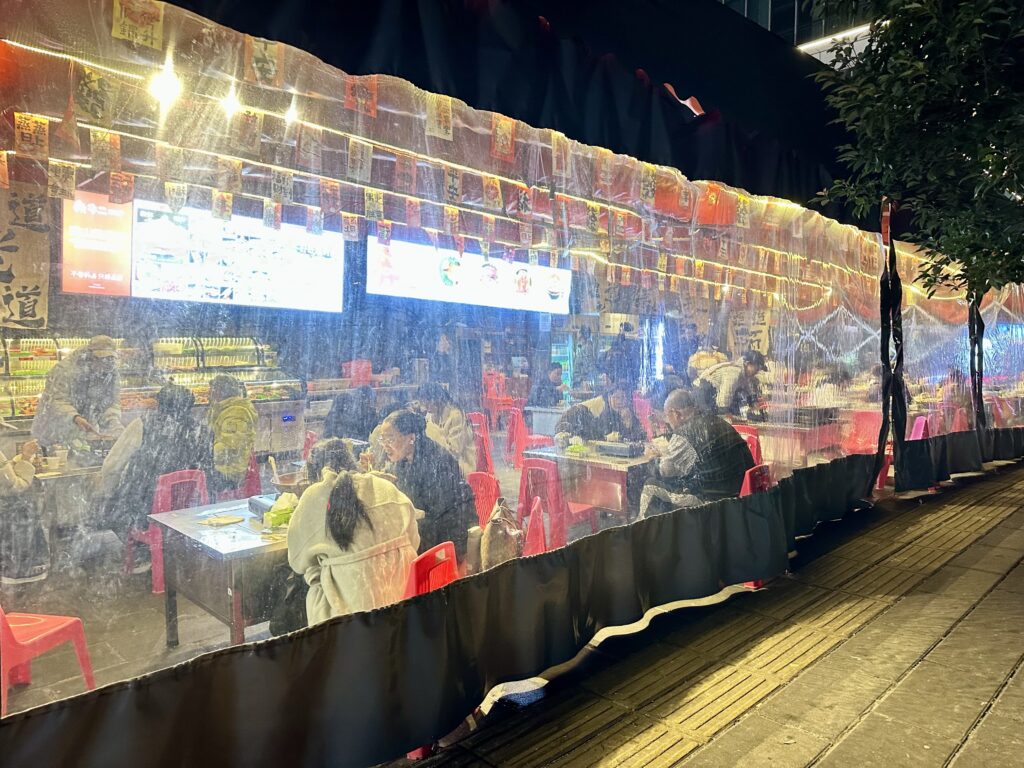
There was nothing much to see in Chenggong District where we stayed, except for a vibrant night market full of street food stalls.
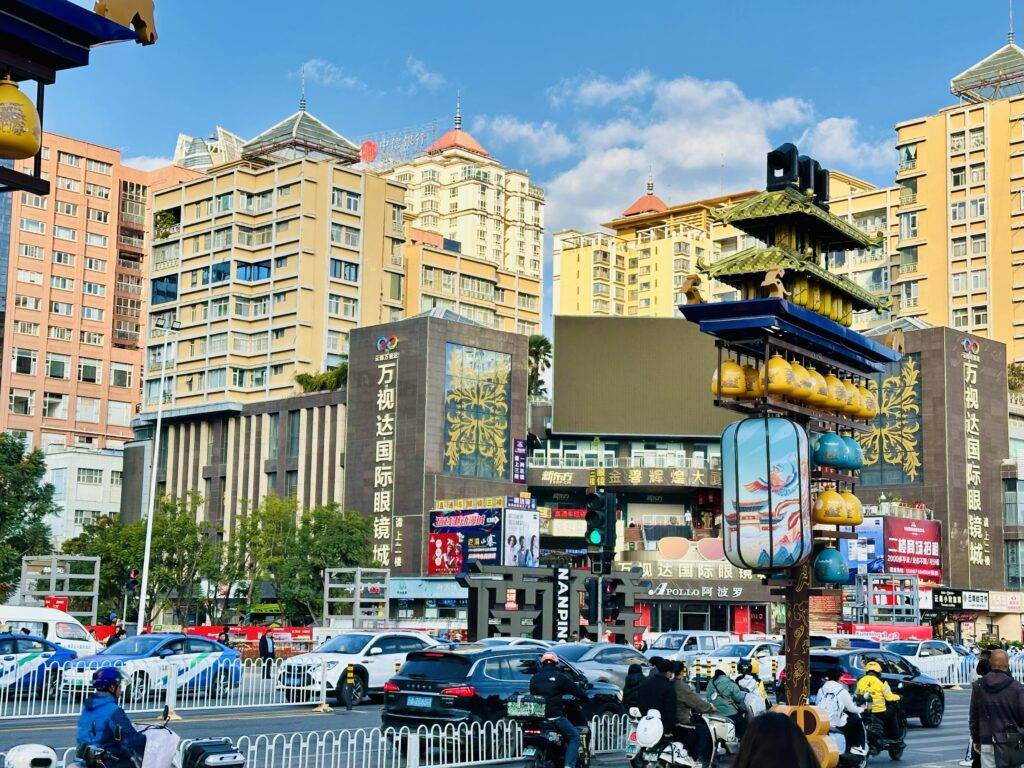
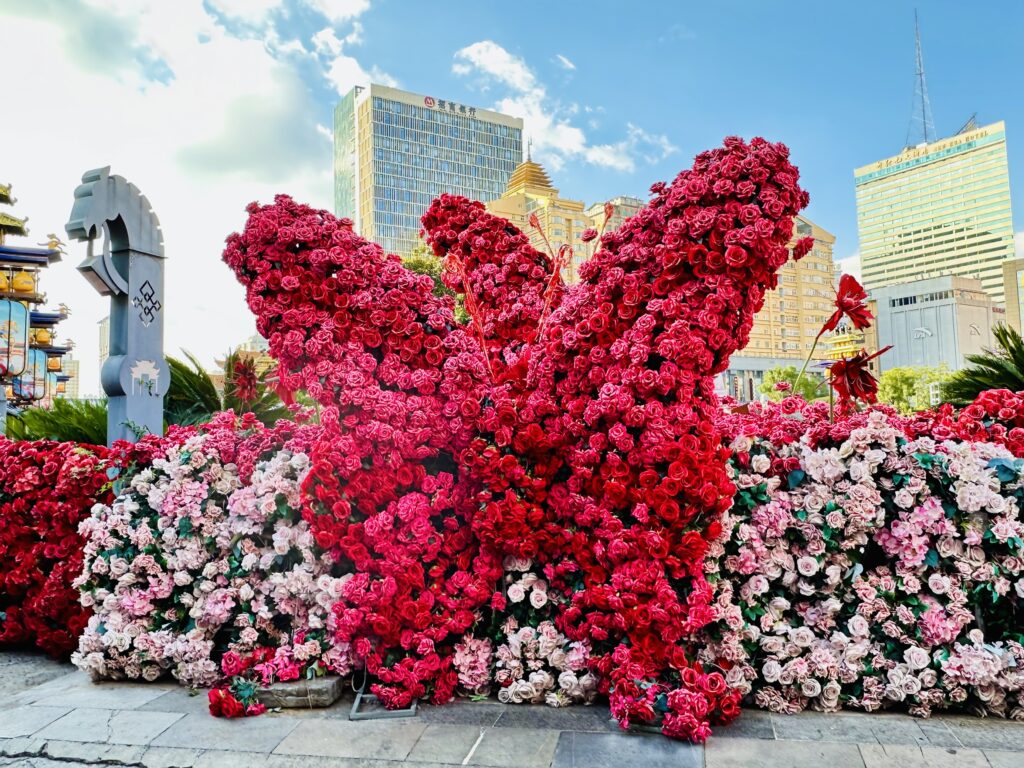
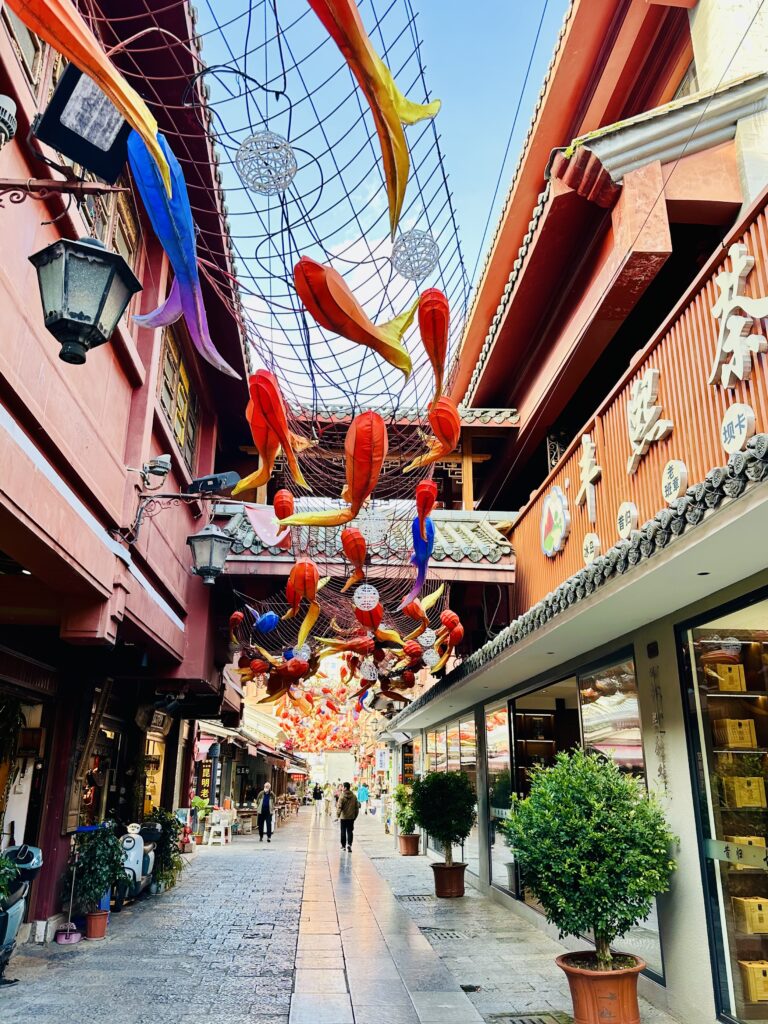
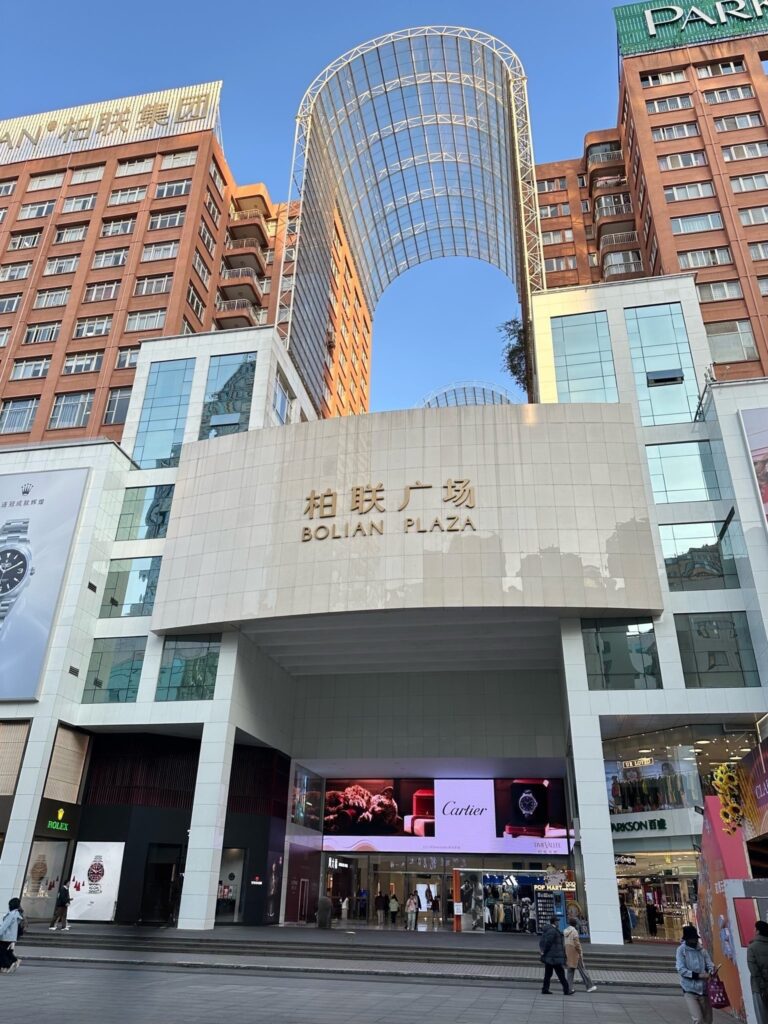
On our return to Kunming for our flight back to Hong Kong, we stayed in a hotel on Nanping Pedestrian Street in the heart of the city. The area buzzed with a downtown vibe with lots of restaurants and shopping malls with international high-end brand names.
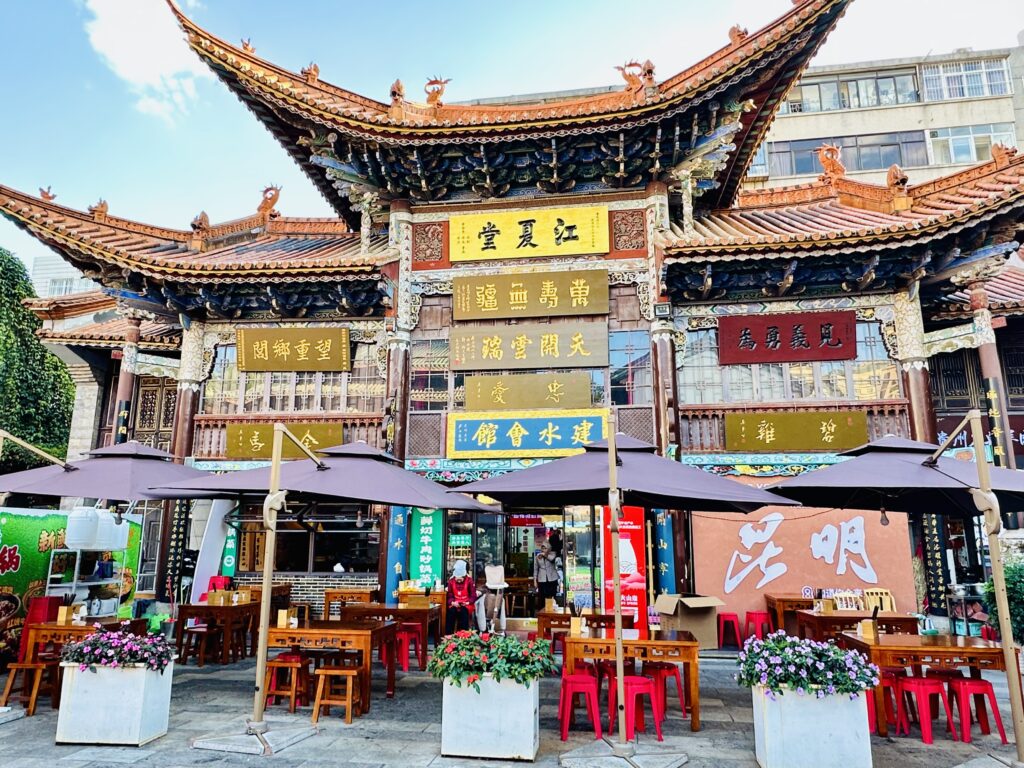
Jinbi Square 金碧廣場
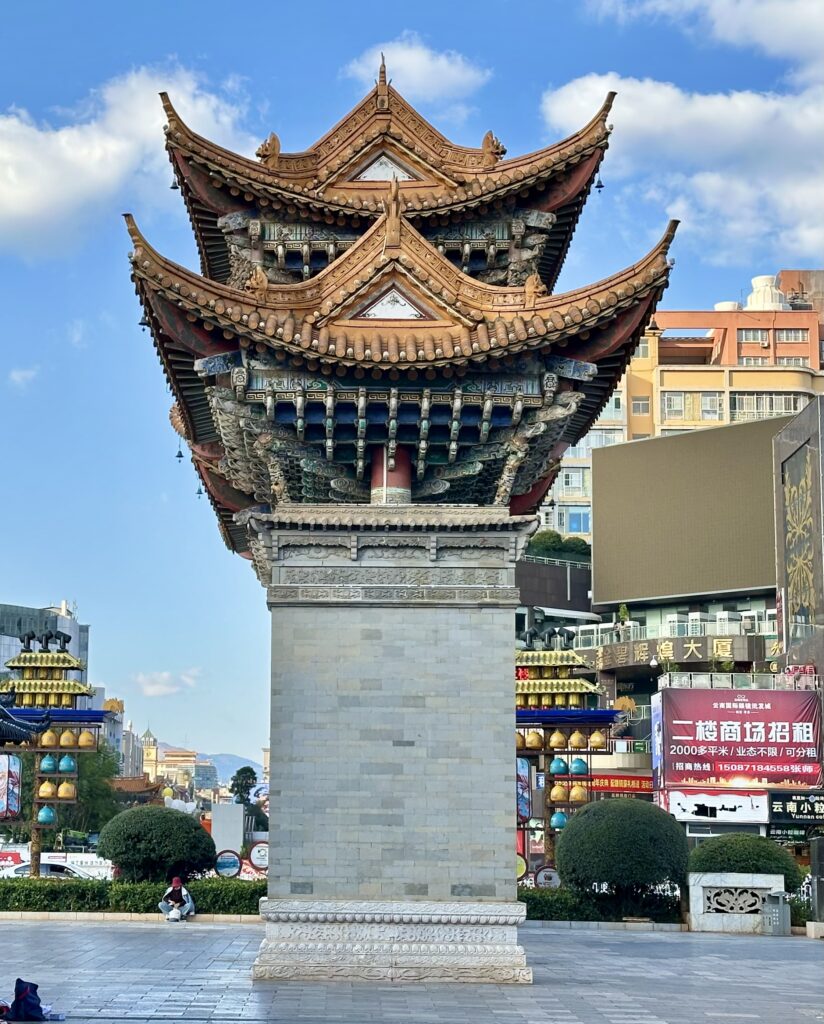
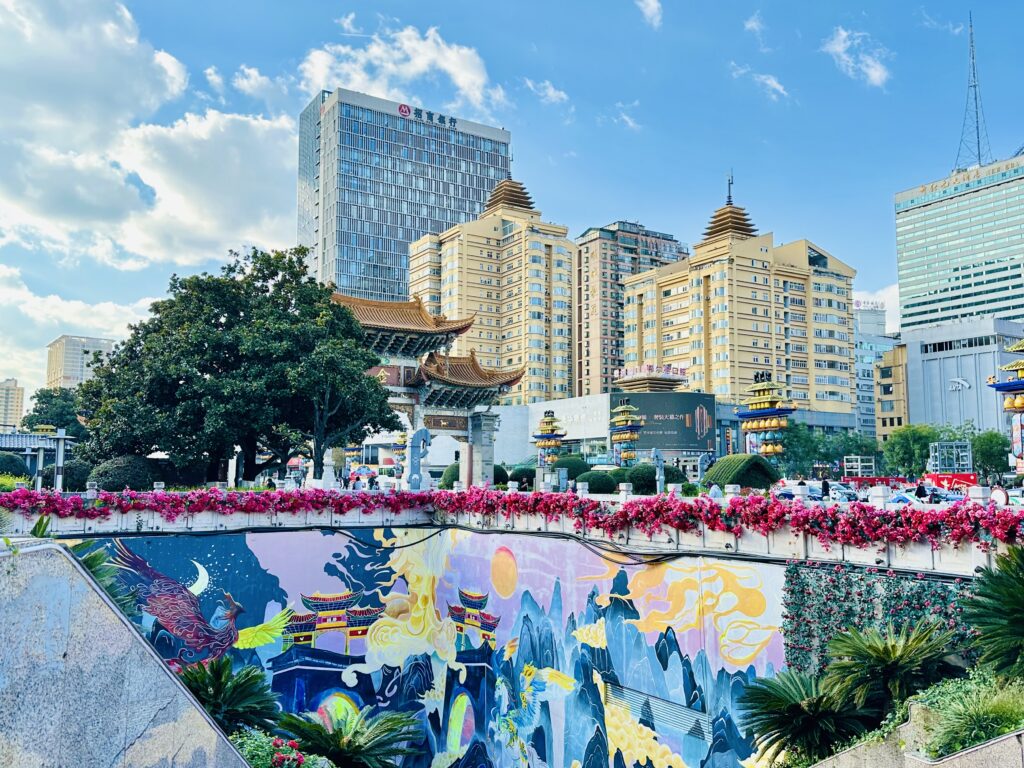
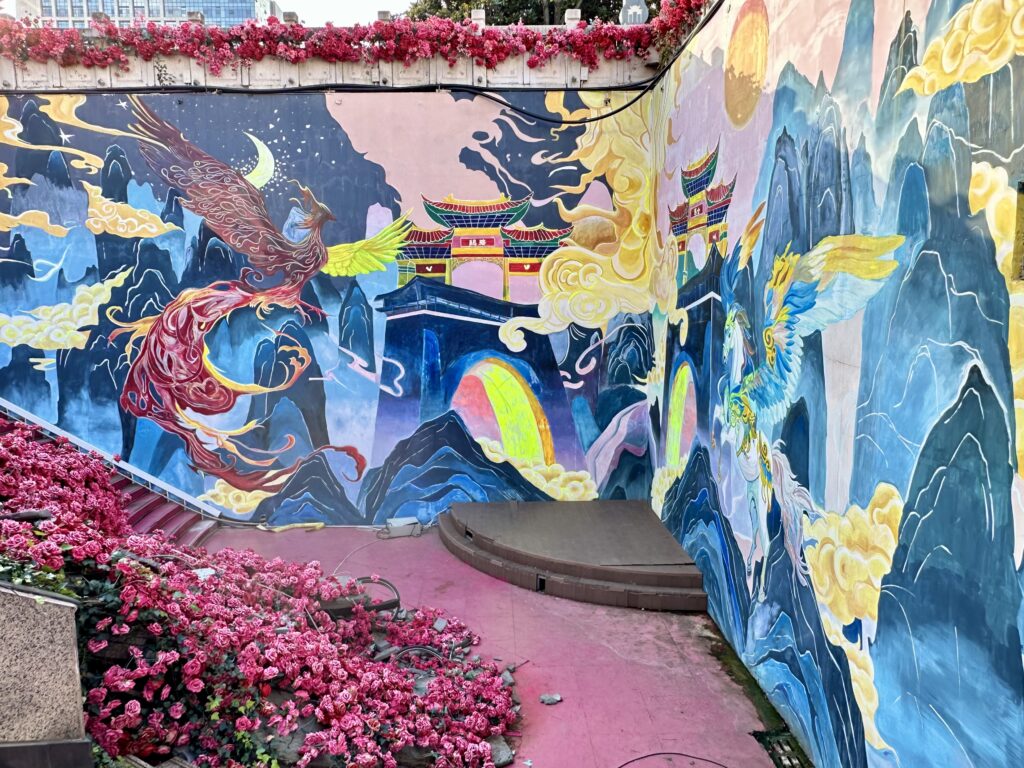
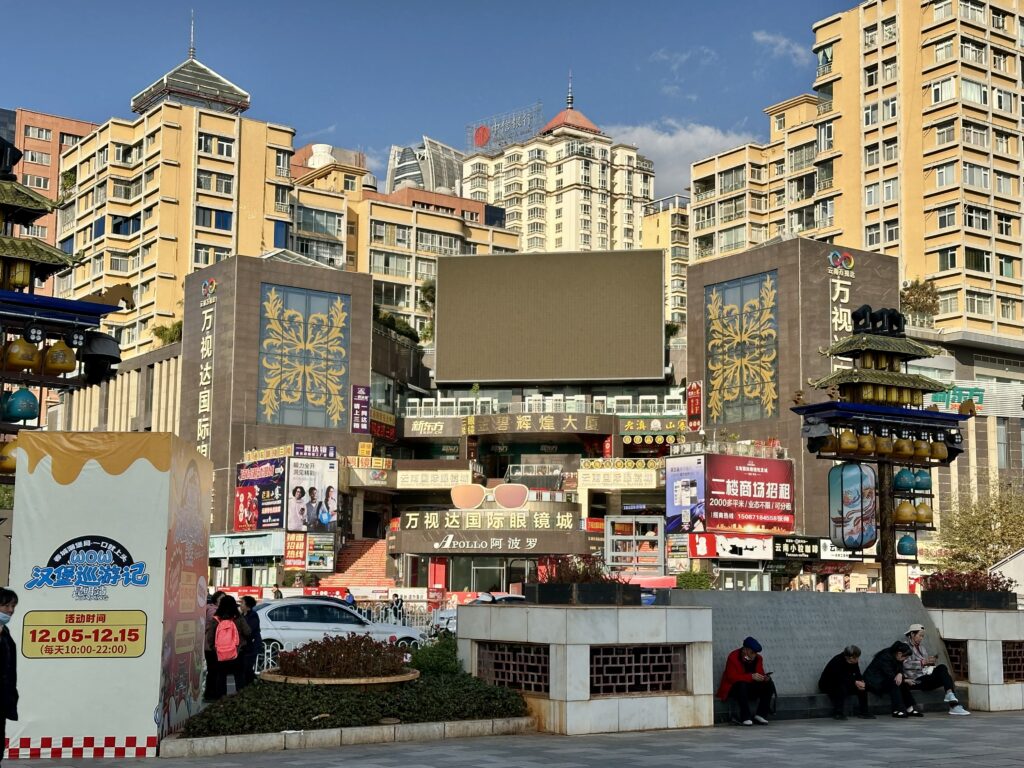
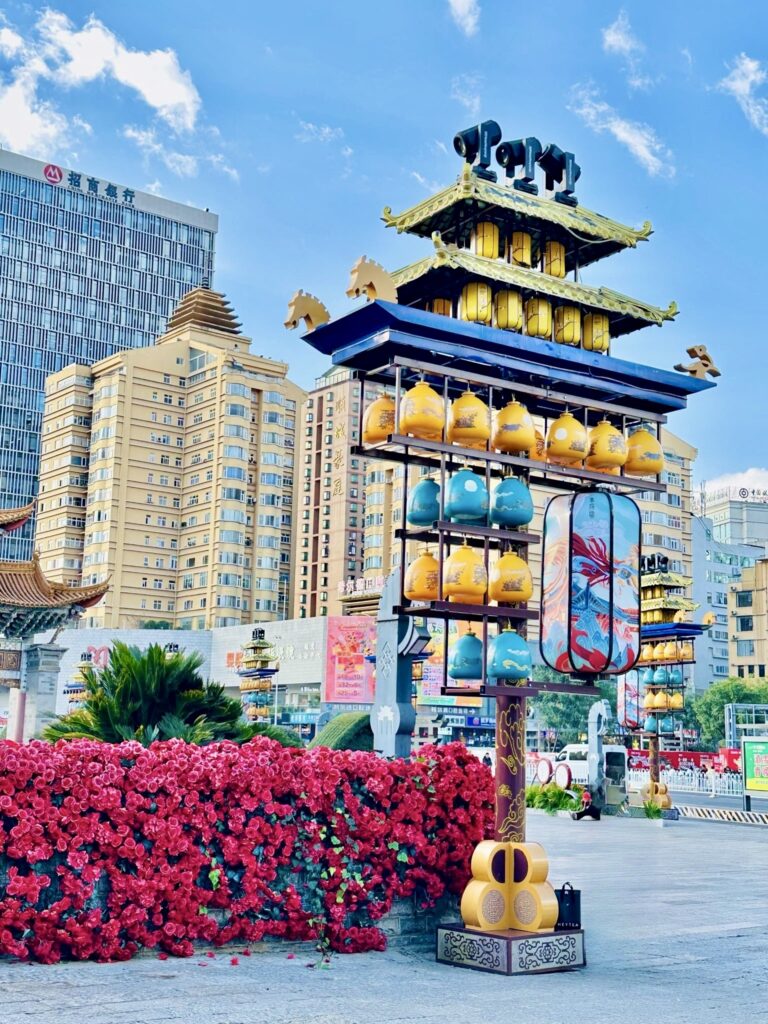
Jinbi Square is a historic and cultural gem in Kunming. It boasts a history of over 400 years, having been built during the Ming Dynasty era. The Square stands out against the backdrop of modern buildings, and a short walk from our hotel.
The prominent feature of the square is two iconic archways: the Golden Horse (Jinma) and the Jade Rooster (Biji), which symbolise the city’s rich heritage.
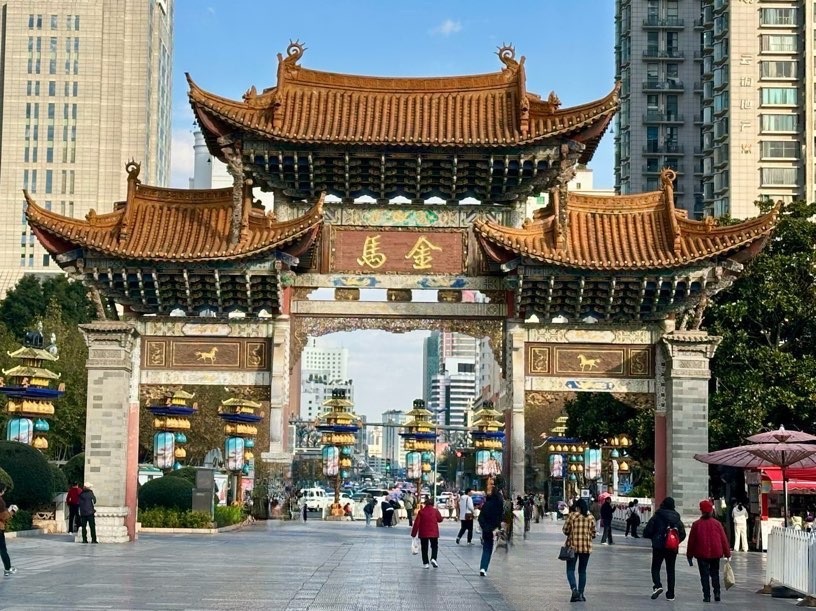
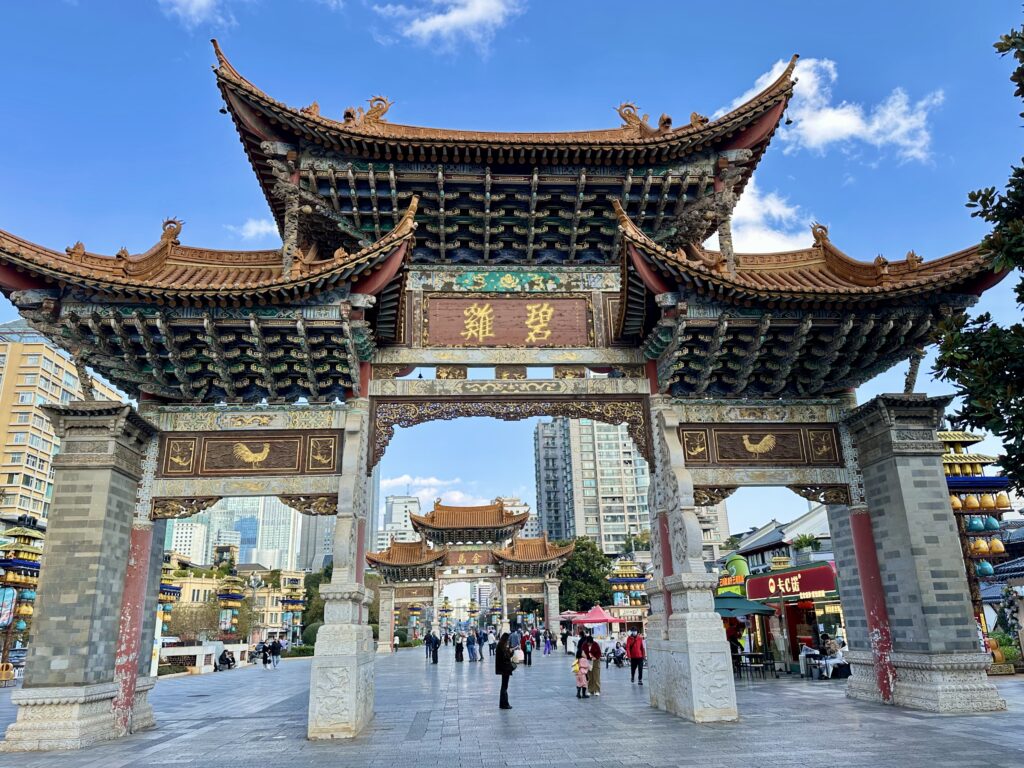
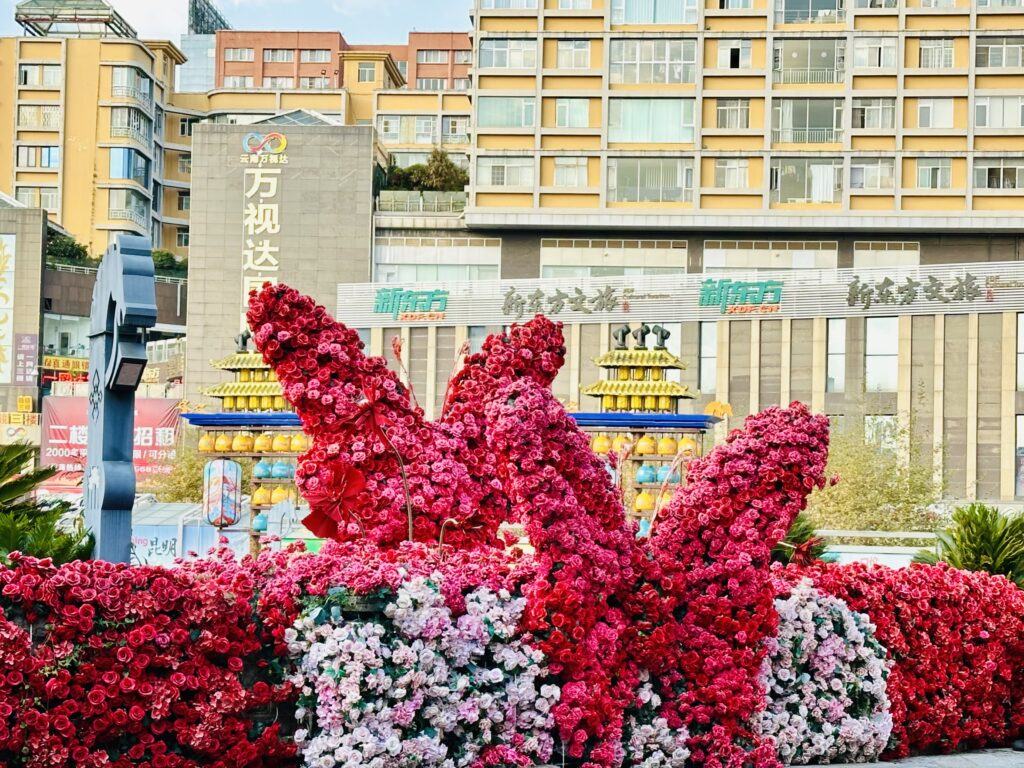
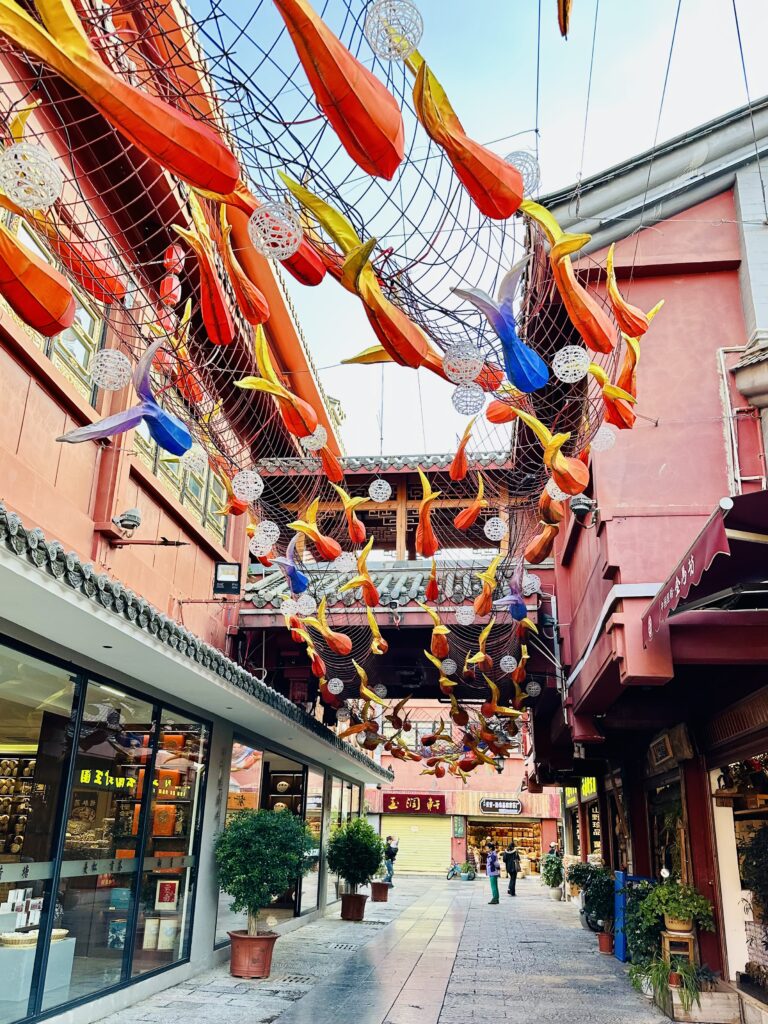
The spacious square is a vibrant hub, offering a mix of local food stalls, ethnic jewellery shops, and unique cafes.
Green Lake Park (Cuihu Park)
Within walking distance from our hotel, Green Lake Park is one of the most iconic and beloved urban parks in Kunming with a long and interesting history
During the Yuan Dynasty (1271–1368), Cuihu was initially part of Dianchi Lake. Over time it became a separate lake. It was in the Ming Dynasty (1368–1644) that it became a scenic spot. In 1692 during the Qing Dynasty, Haixin Pavilion (湖心亭) was built in the centre of the lake. Connected by bridges, it became a symbol of the park.
The Lake itself occupies 37 acres of the 52-acre site of the park.
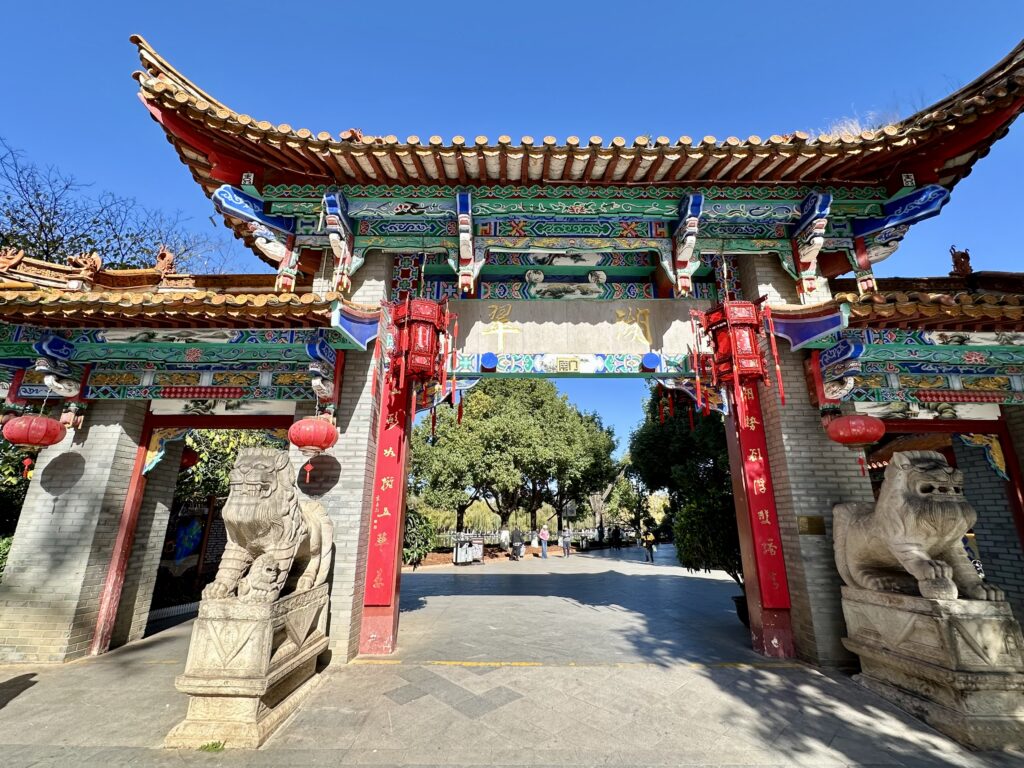
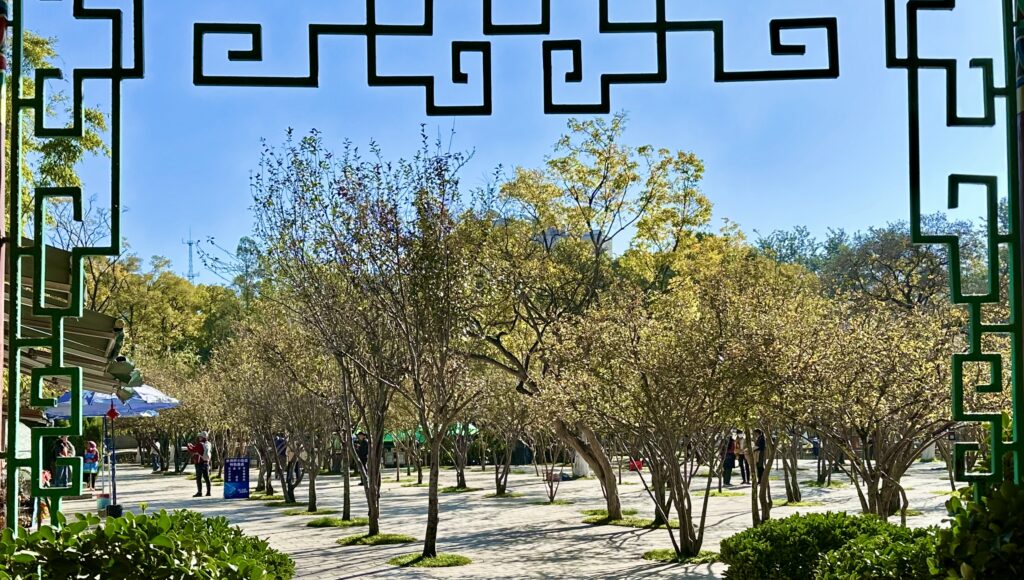
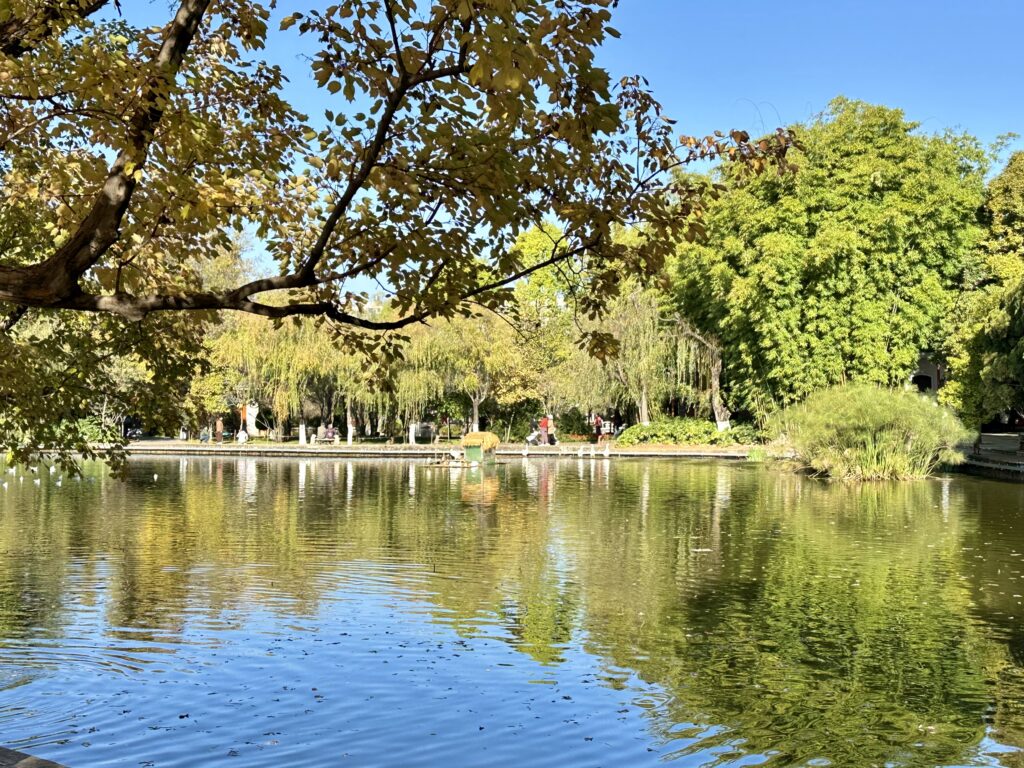
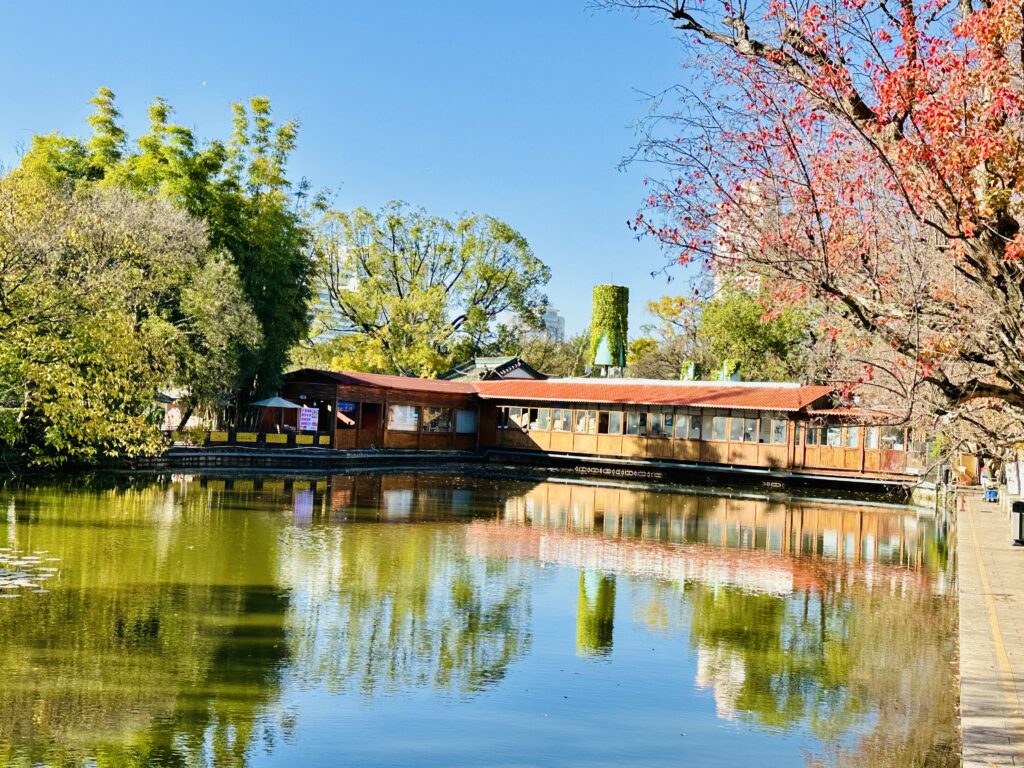
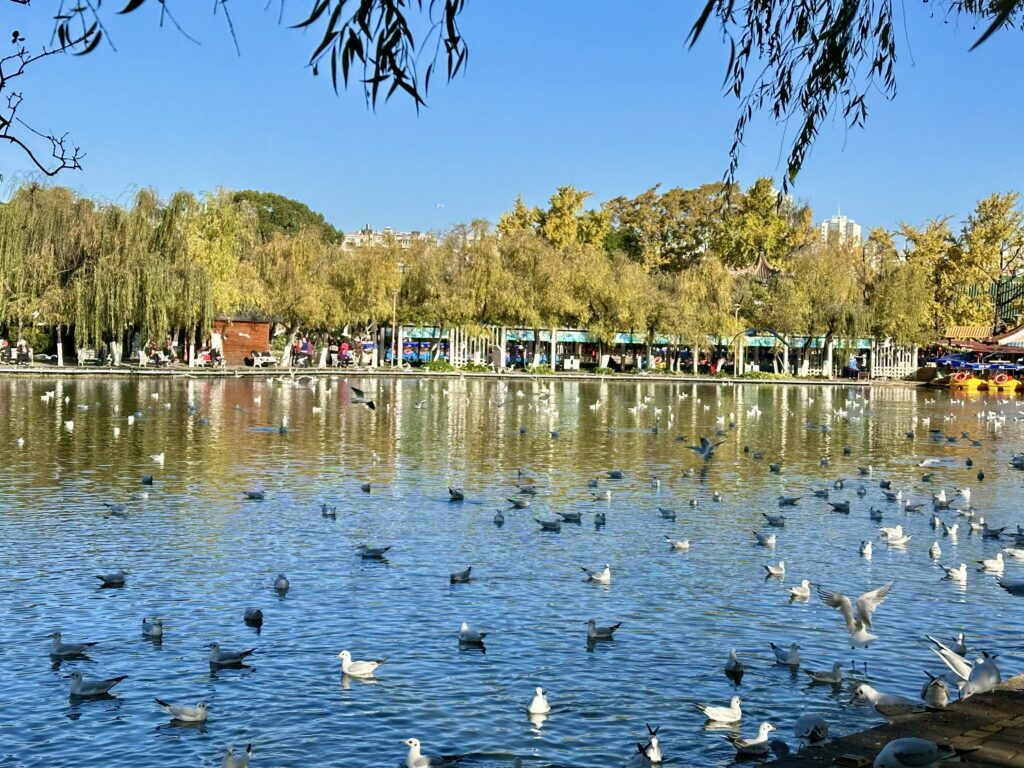
Finally, I managed to see some autumnal colours in China this year! It set my heart aglow to see trees of copper brown, saffron yellow and verdant green interspersing with weeping willows! So while others crowded around the pavilion, temple and seagulls, I happily wandered around the lake, marvelling at nature’s tapestry
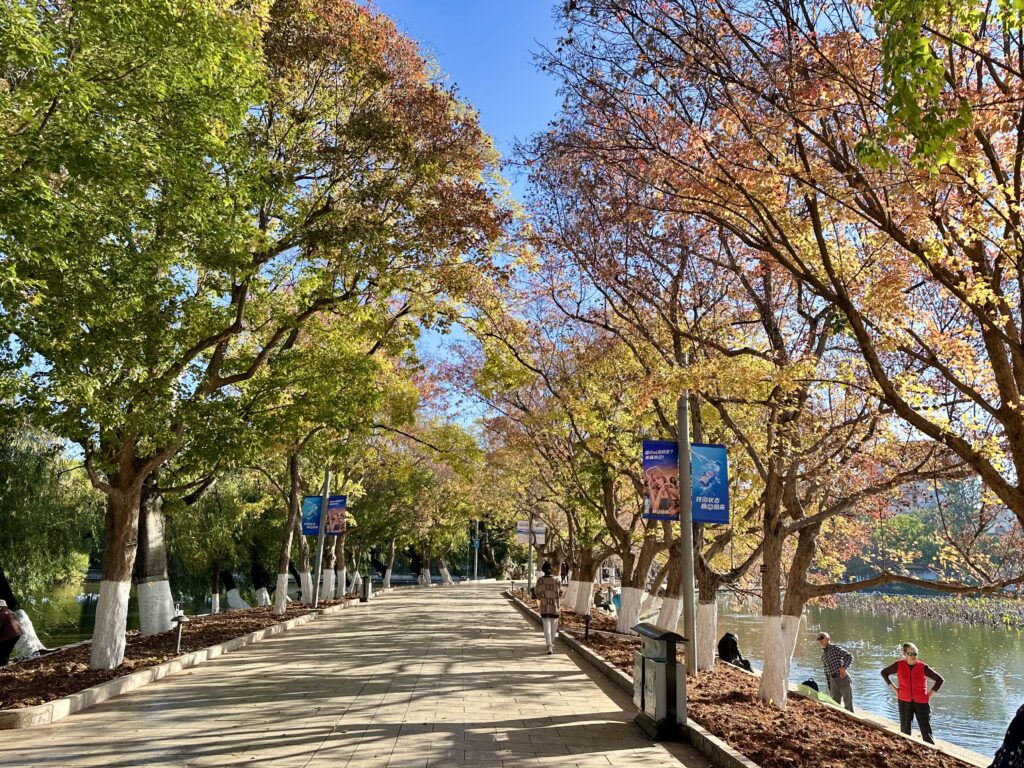
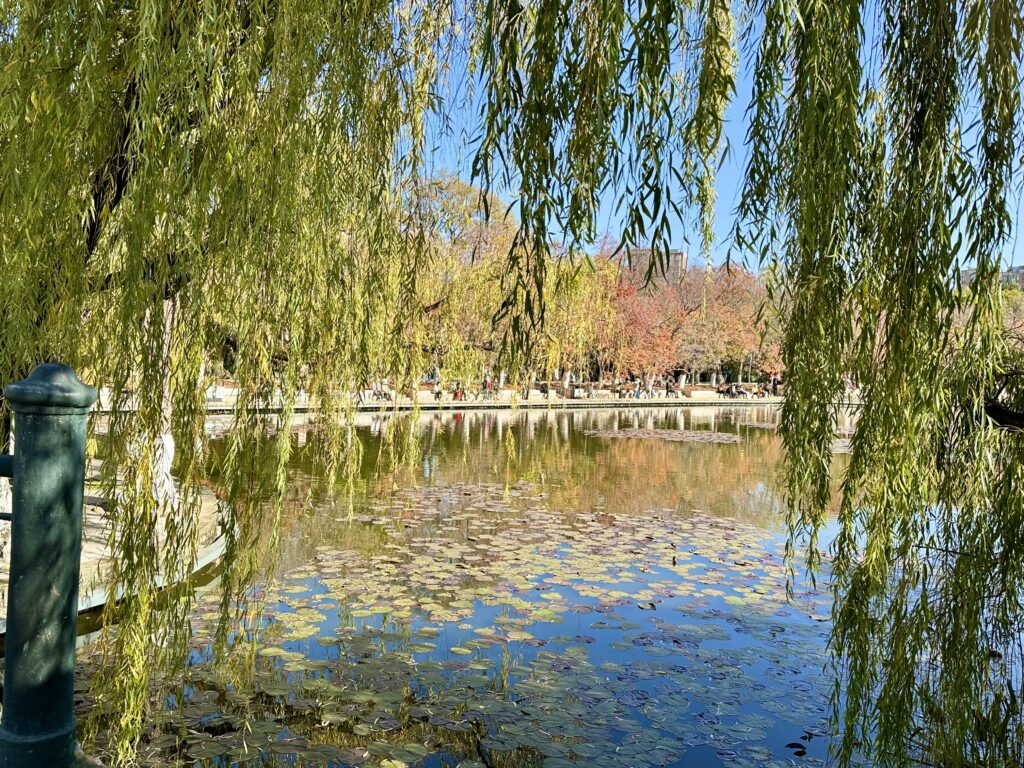
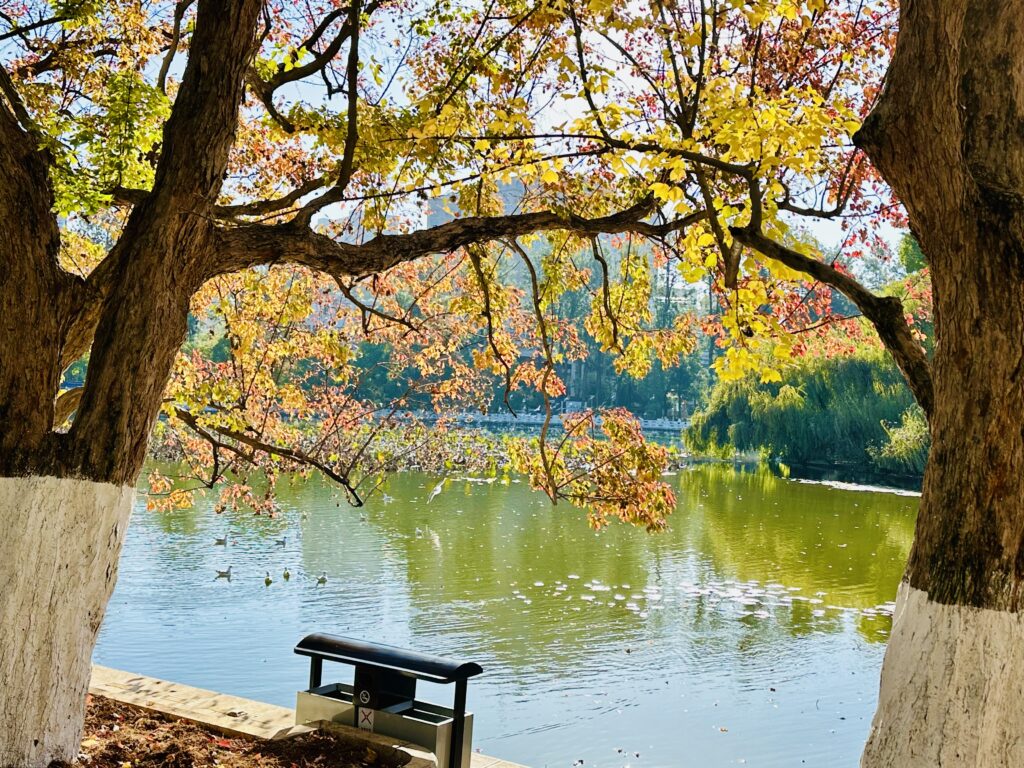
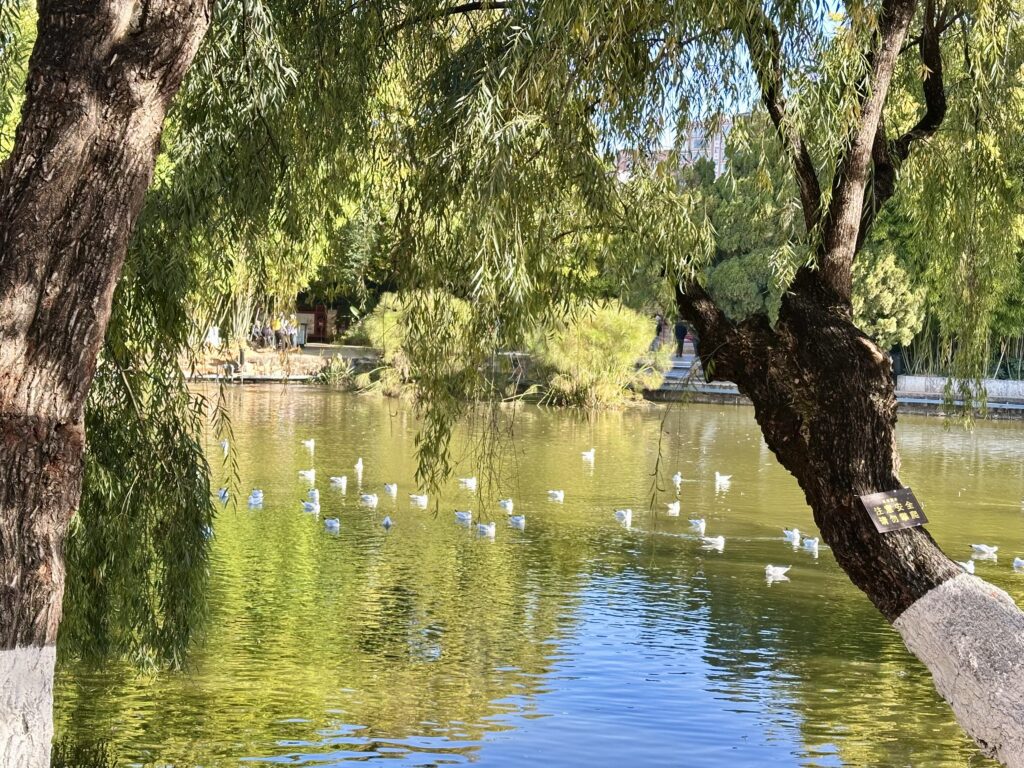
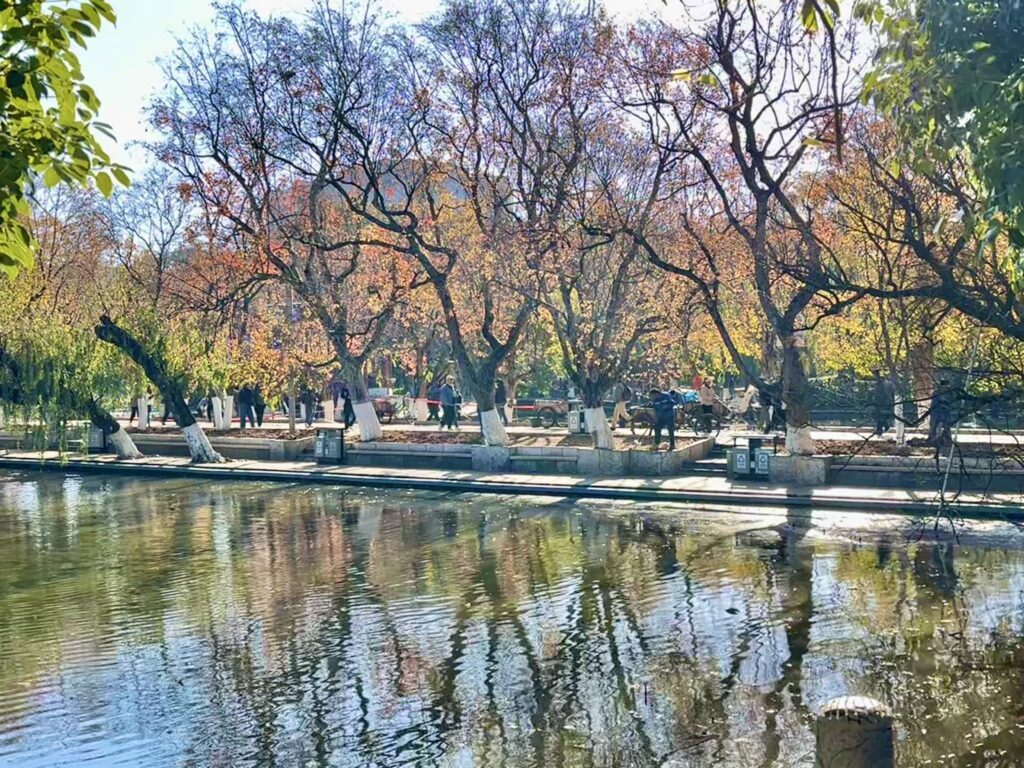
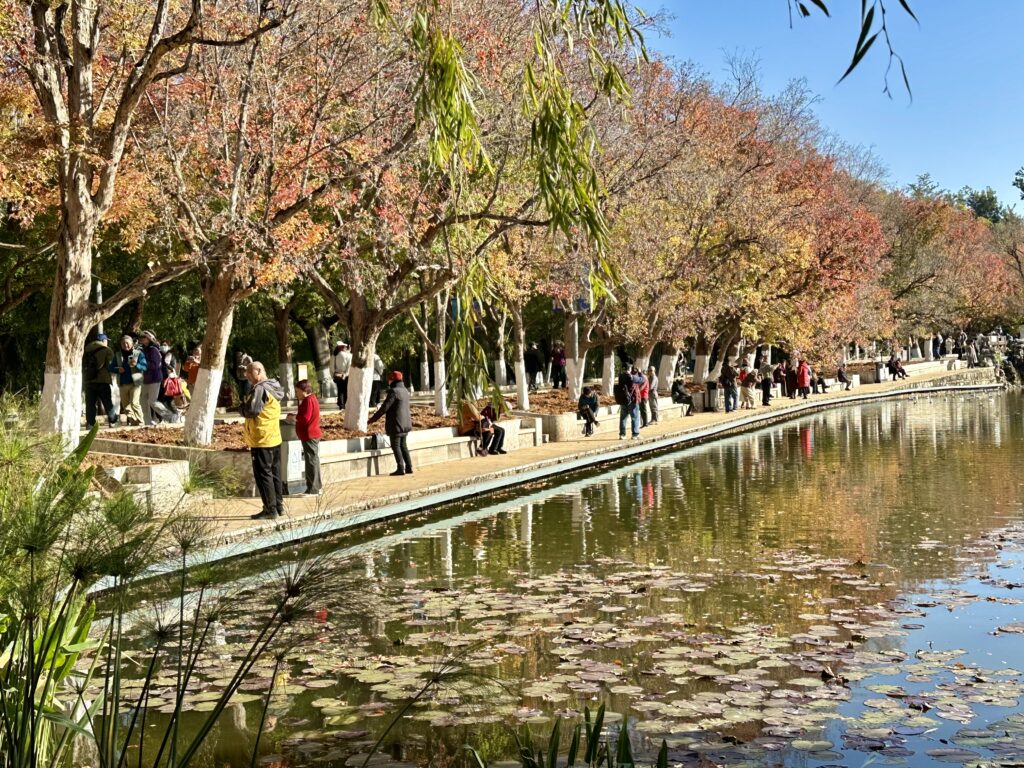
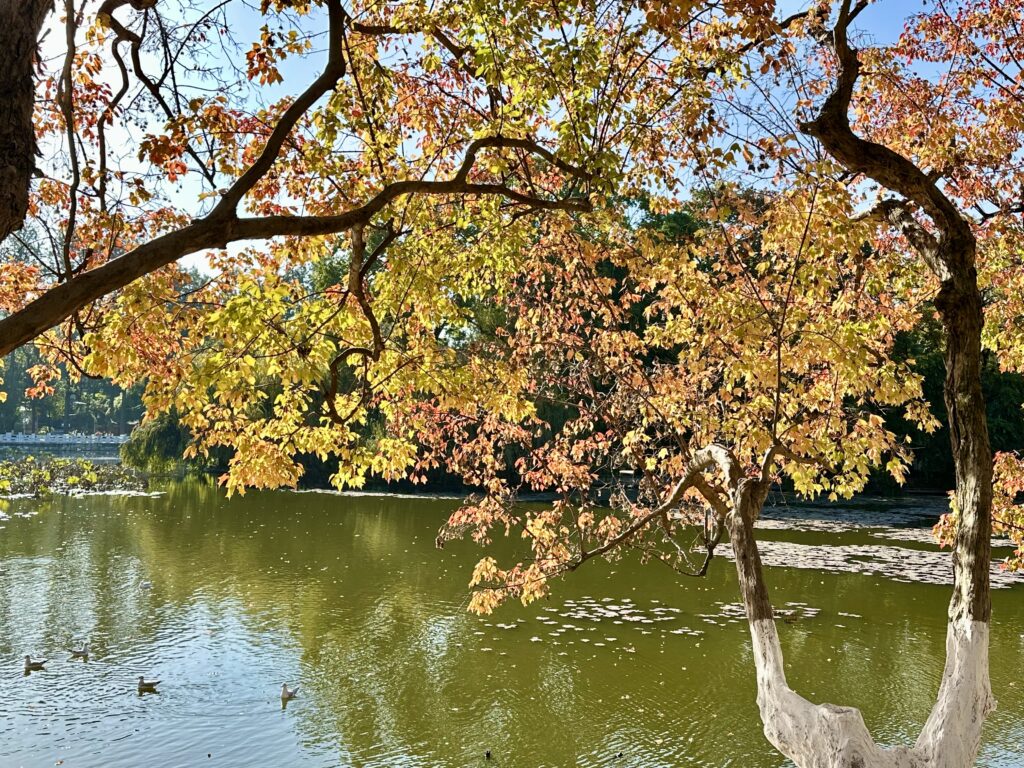
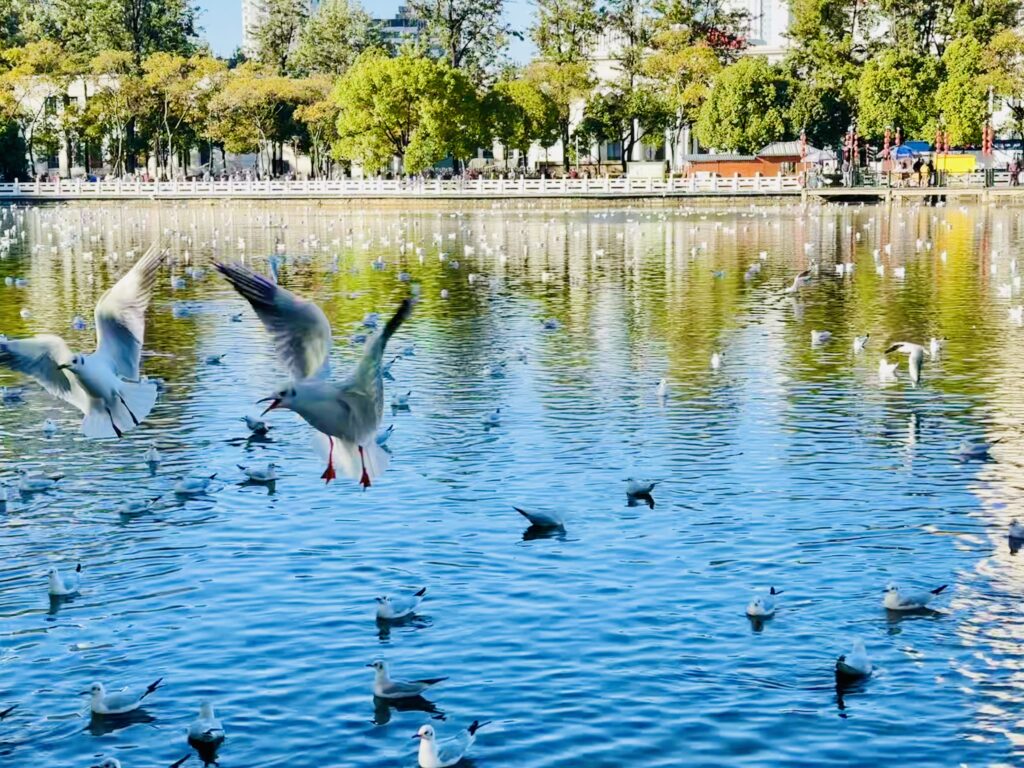
Feeding seagulls in winter is popular with locals and travellers alike. The park’s seagull-feeding tradition began spontaneously in the 1980s and is now a celebrated annual event.

Mementos of Kunming