- Jiuzhaigou – one of China’s Natural Masterpieces
- Leshan – a cornerstone of Chinese Buddhist heritage
- Chengdu – home of pandas and spicy food
- Datong – Carved in Stone, Alive with Spirit
- 5 hotels with character in Jiangxi
- 5 Unique Ancient Villages in Jiangxi’s Wuyuan County
- Jiangxi – a land of mountains, rivers and ancient towns
- Shenzhen – a multi-faceted modern city
- Kunming – Gateway to Yunnan
- Lijiang – a living ancient town
- Shangri-la – “the closest place to heaven”
- Dali – where nature meets culture
- Inner Mongolia – China’s wild heart
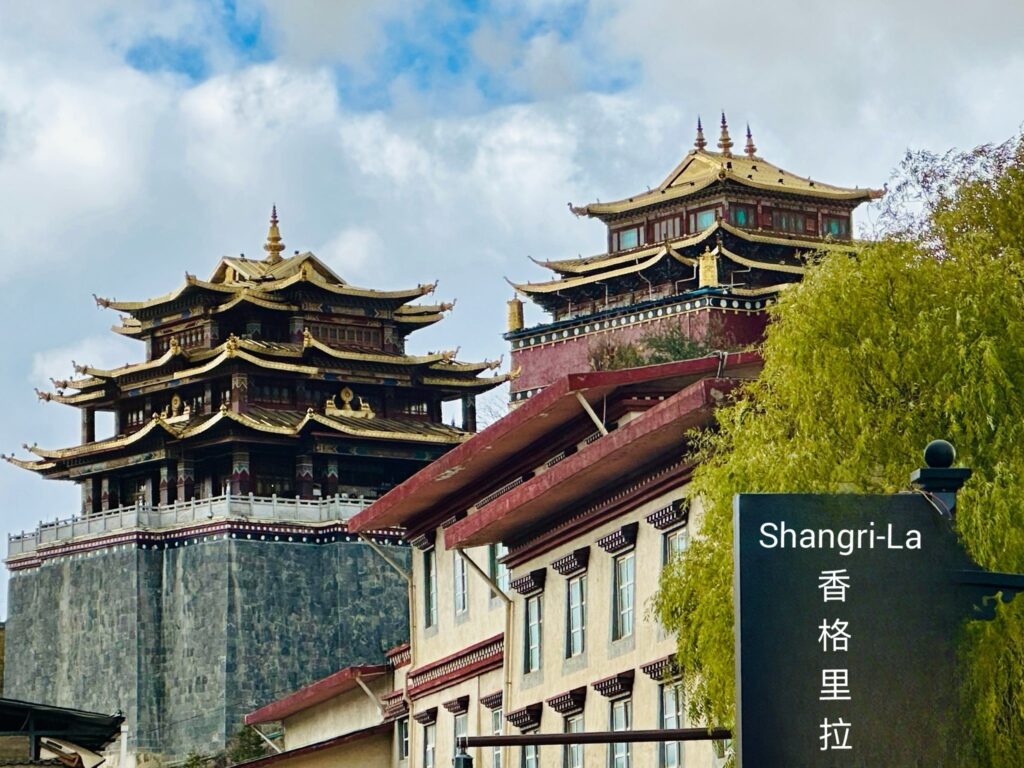
Although this bold statement of being “the closest place to heaven” is primarily poetic, it does capture the essence of Shangri-La which has an altitude of 3300 metres!
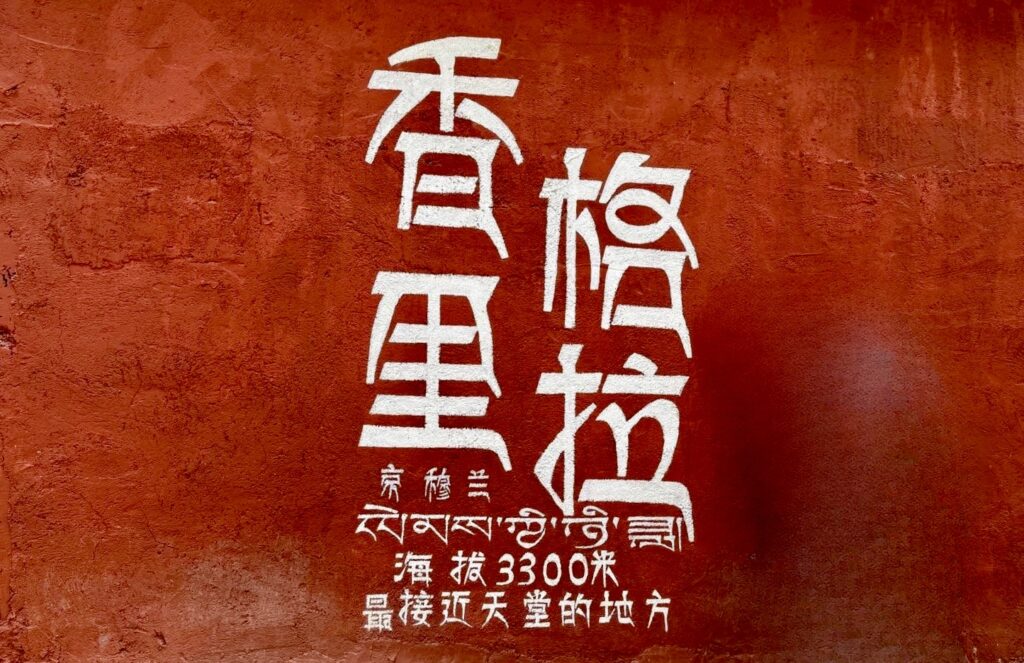
The Origin of Shangri-La
The name Shangri-La carries connotations of paradise, harmony, and hidden beauty, thanks to James Hilton’s 1933 novel Lost Horizon. It depicts a utopian Himalayan valley where people live in peace, harmony, and astonishing longevity, isolated from the world’s troubles.
The government officially renamed Zhongdian County (中甸县) to “Shangri-La” (Xianggelila) in 2001 to promote tourism in the Diqing Tibetan Autonomous Prefecture. It’s a very shrewd move! The invitation to escape this troubled world we live in is irresistible!
My brother, sister-in-law, sister and I hired a driver/guide and a 7-seater for a day trip to Shangri-La from Lijiang for ¥1300. Considering that the driving distance, via Tiger Leaping Gorge, is approximately 108 miles, it was more than reasonable!
Tiger Leaping Gorge
Excitement mounted as we passed the toll to Shangri-La onto Tiger Leaping Gorge. It was about 54 miles but It took about 2 hours to negotiate the winding serpentine road.
Tiger Leaping is part of a UNESCO Heritage Site – the Three Parallel Rivers of Yunnan Protected Areas – inscribed in 2003.
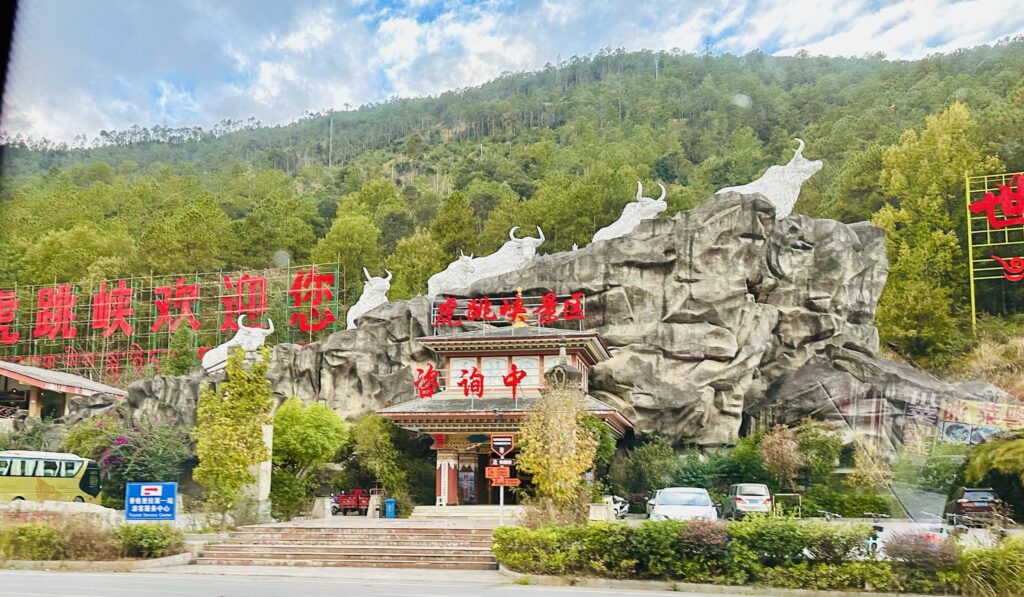
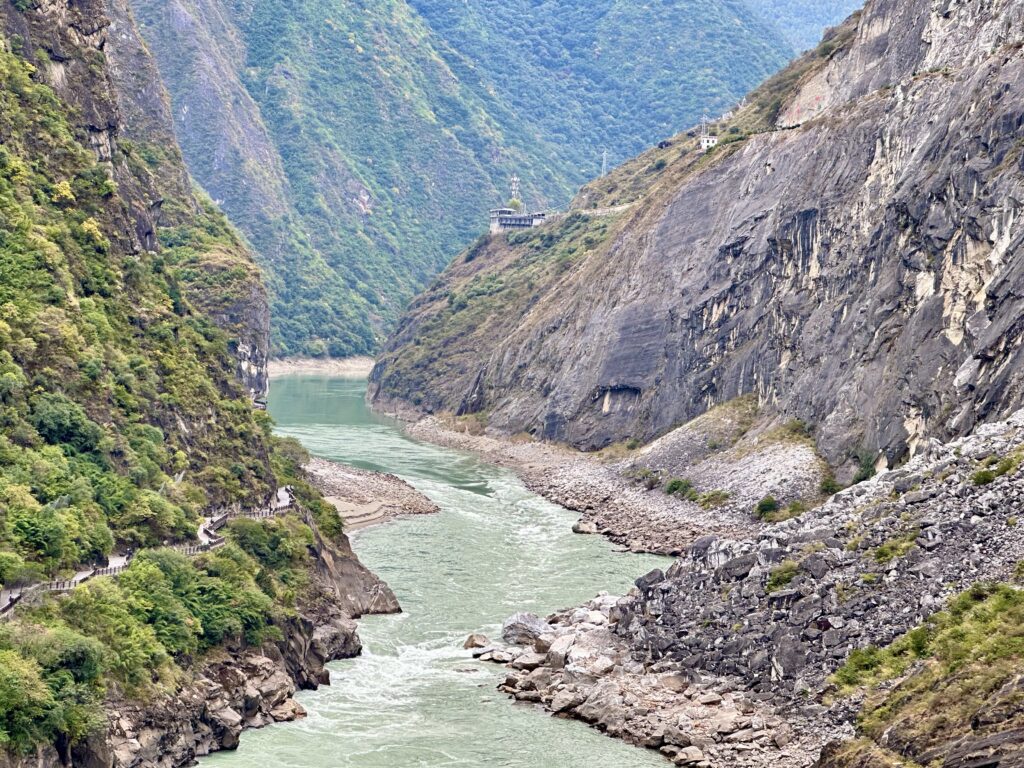
Tiger Leaping Gorge is a deep, scenic canyon, the “first bend of the Yangtze River.” It’s one of the deepest canyons in the world, with the Jinsha River thundering through mountains that rise dramatically from the riverbed.
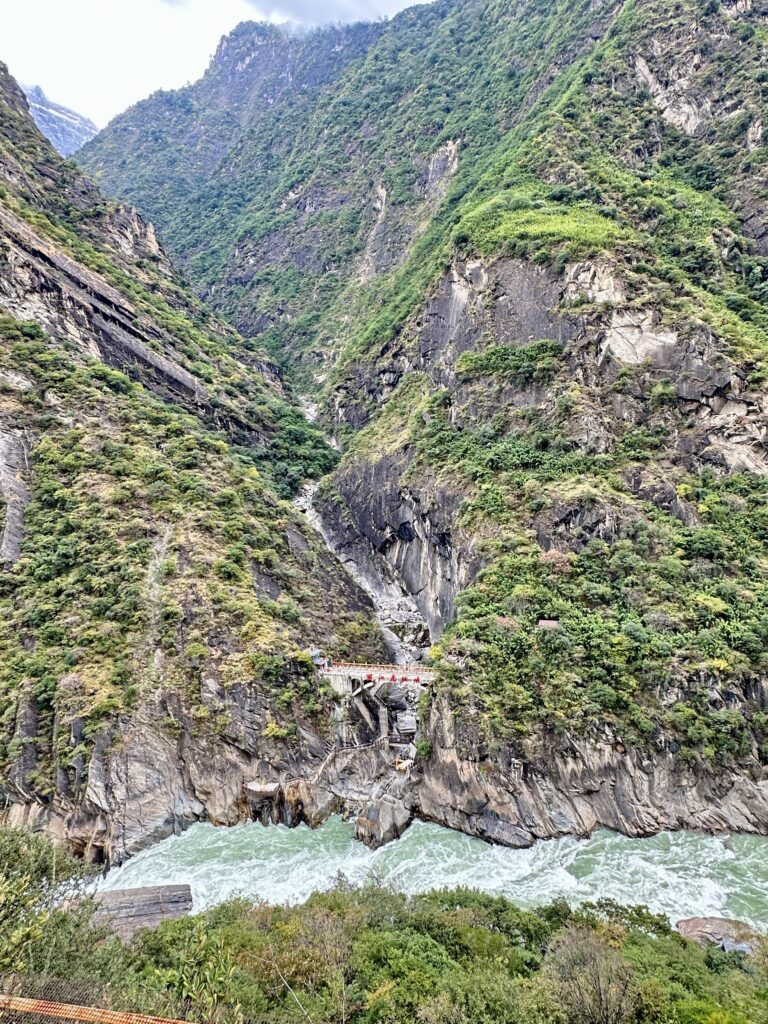
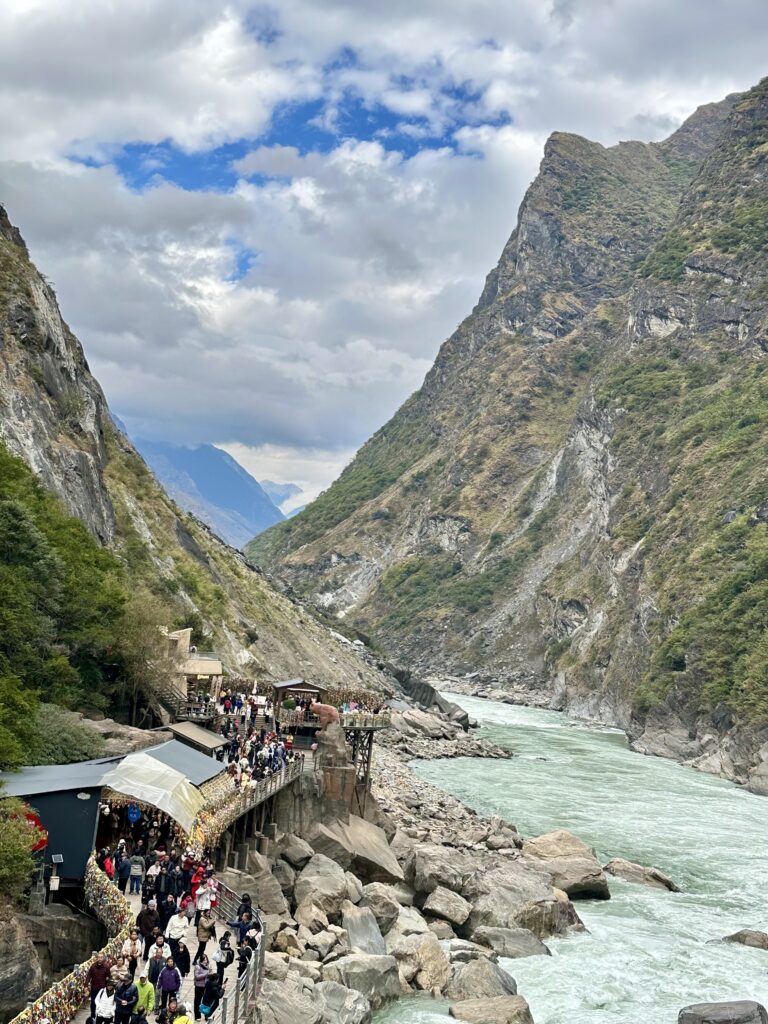
The maximum depth of the canyon is nearly 4,000 metres. It’s a hikers’ paradise with miles of hiking trails.
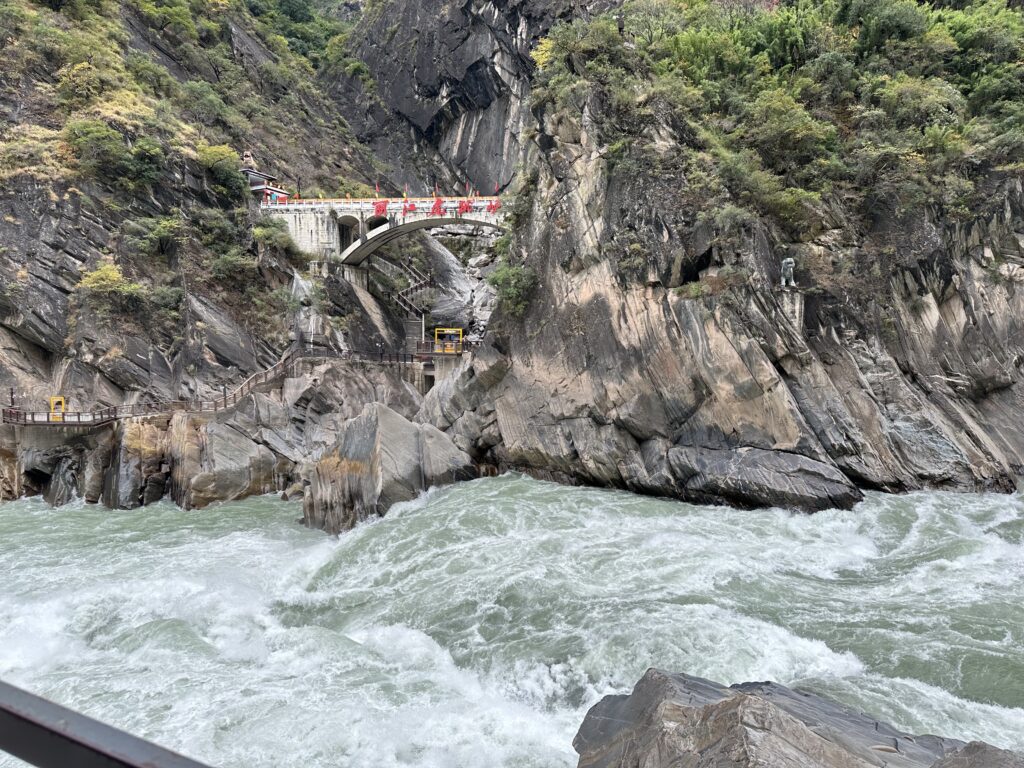
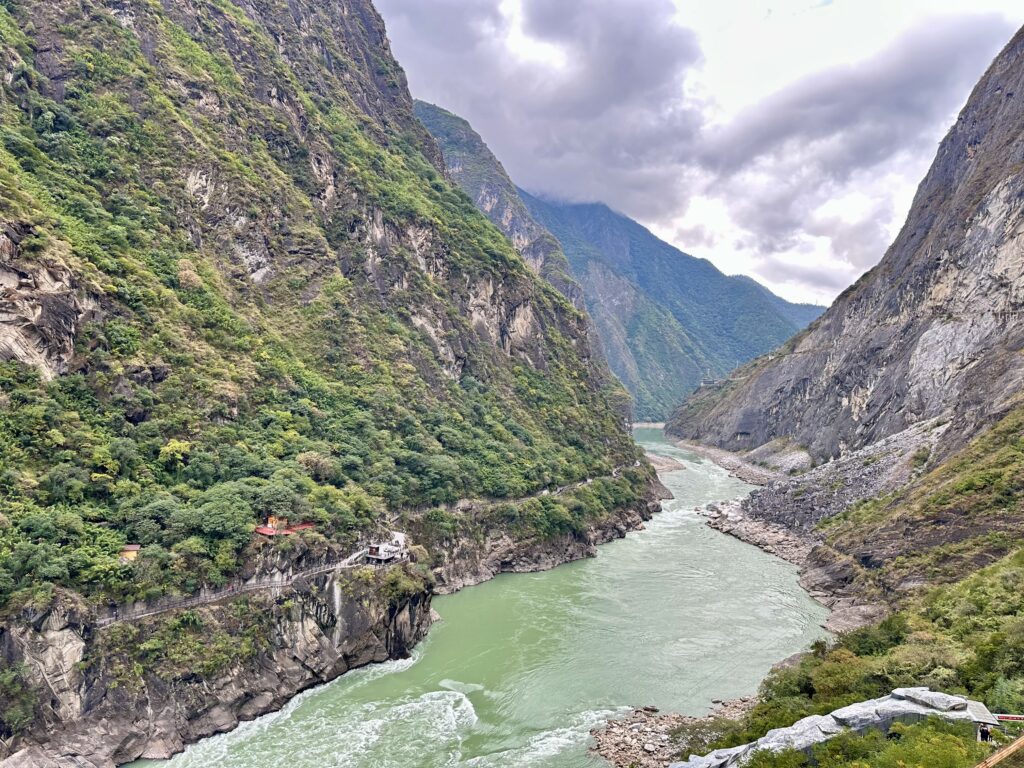
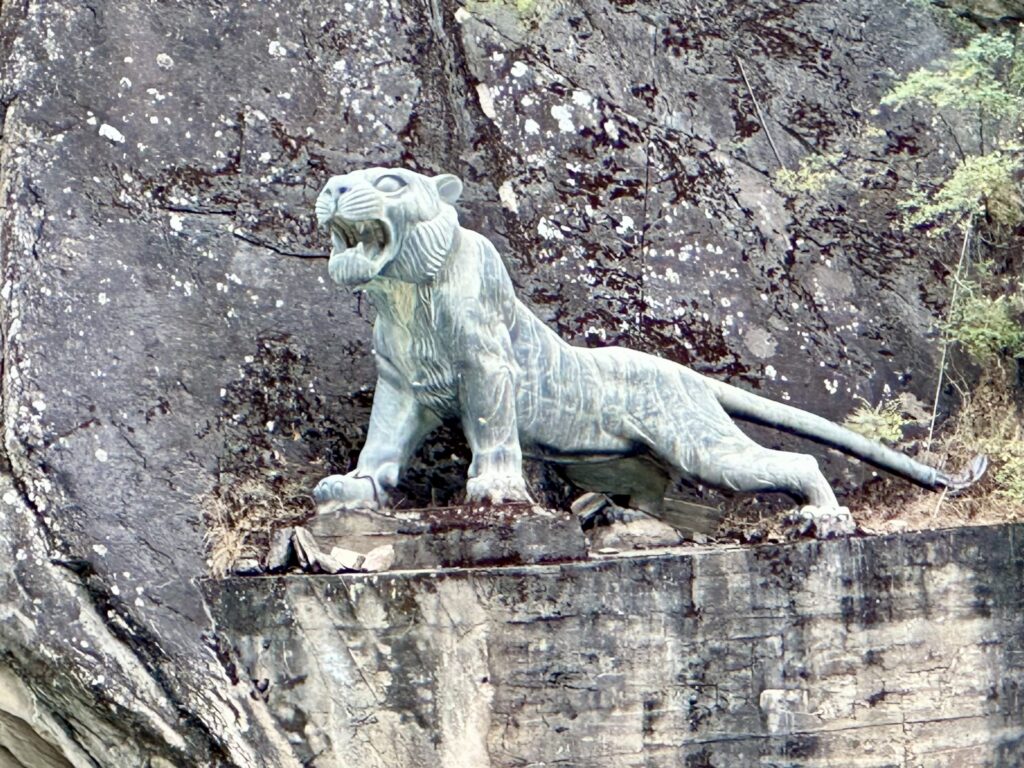
For those who are not so energetic, there’re escalators to get down to the gorge and back up for ¥70 each.
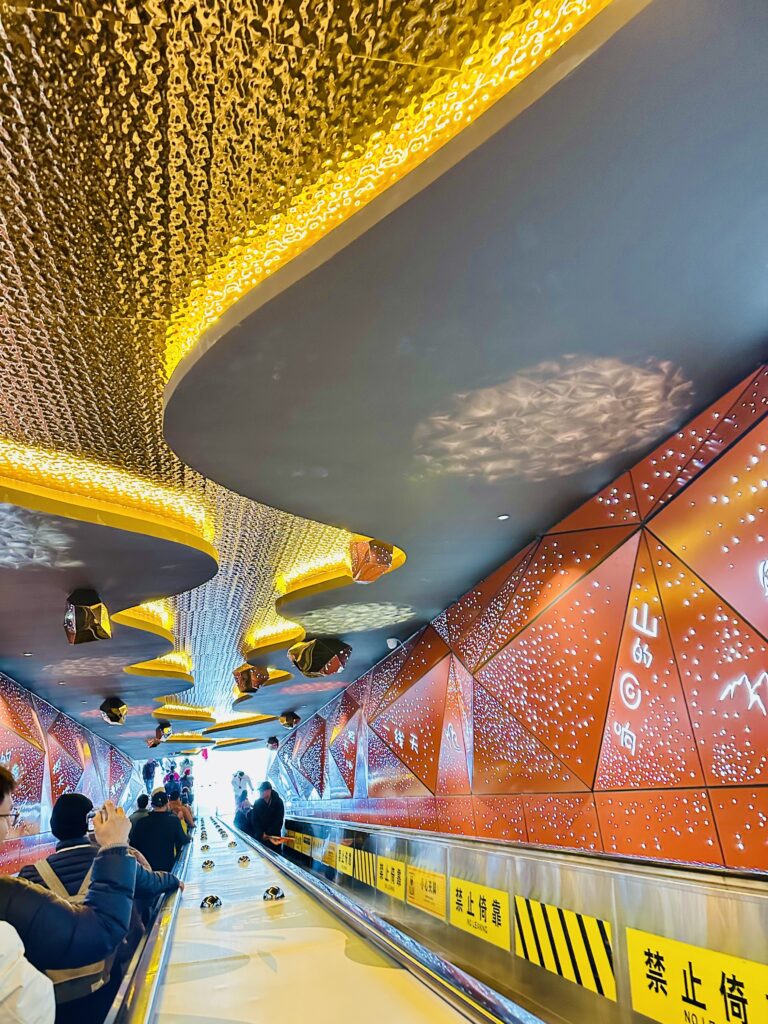
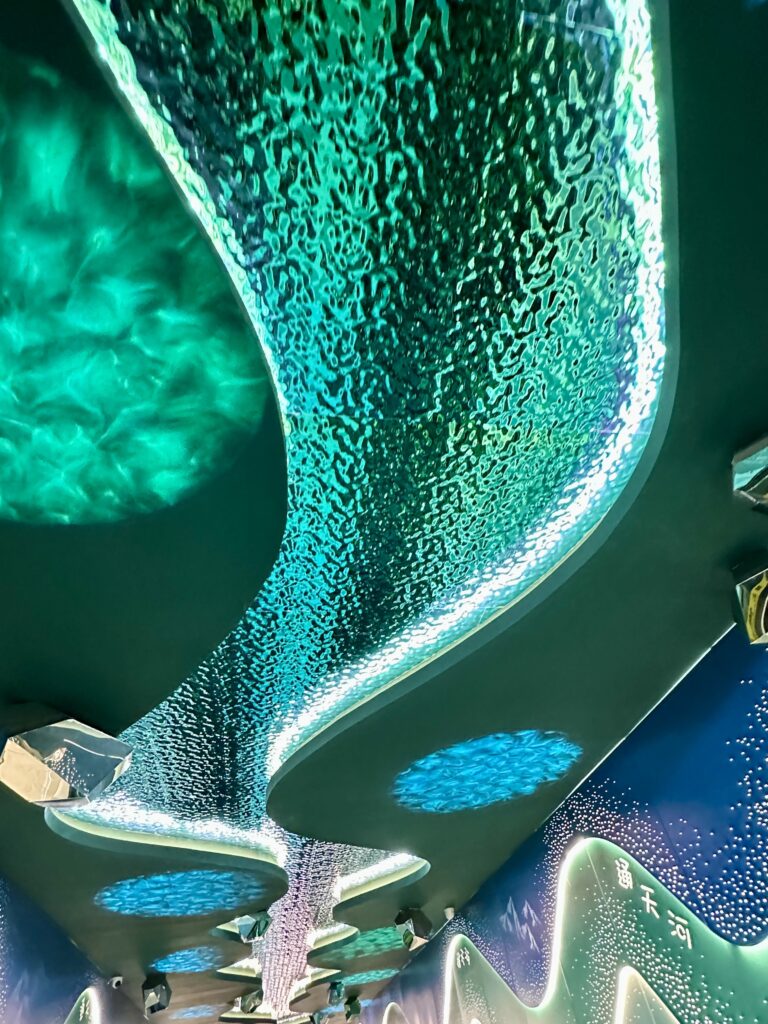
Dukezong Ancient Town
After a couple of hours at Tiger Leaping Gorge we headed for Dukezong Ancient Town in fine drizzles. Miraculously they stopped when we were dropped off at the East Gate. In fact, during the two and half hours that we were there, some brightness actually broke through!
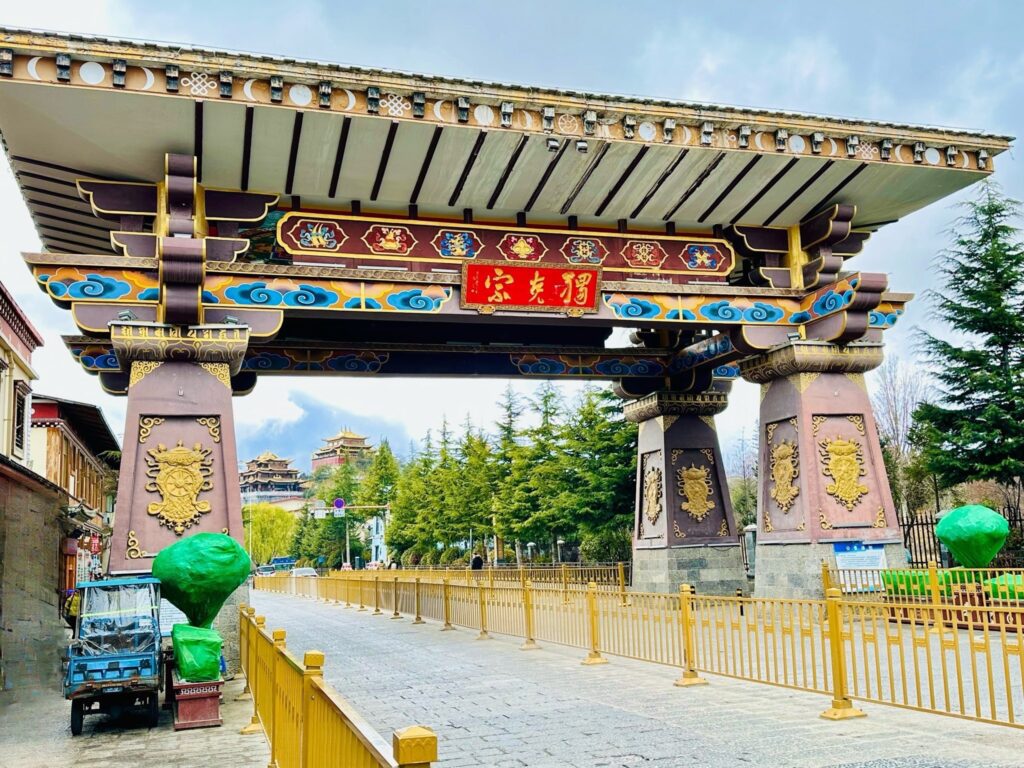
From the East Gate, it was a straight line down a street lined with shops on both sides to the ancient town. Through the ornate Chinese archway, two imposing structures were visible in a distance: the three-story Chaoyang Tower and the Tibetan Big Buddha Temple.
Chaoyang Tower is a historic pagoda, originally built as a watchtower in the Qing dynasty and has been rebuilt several times since.
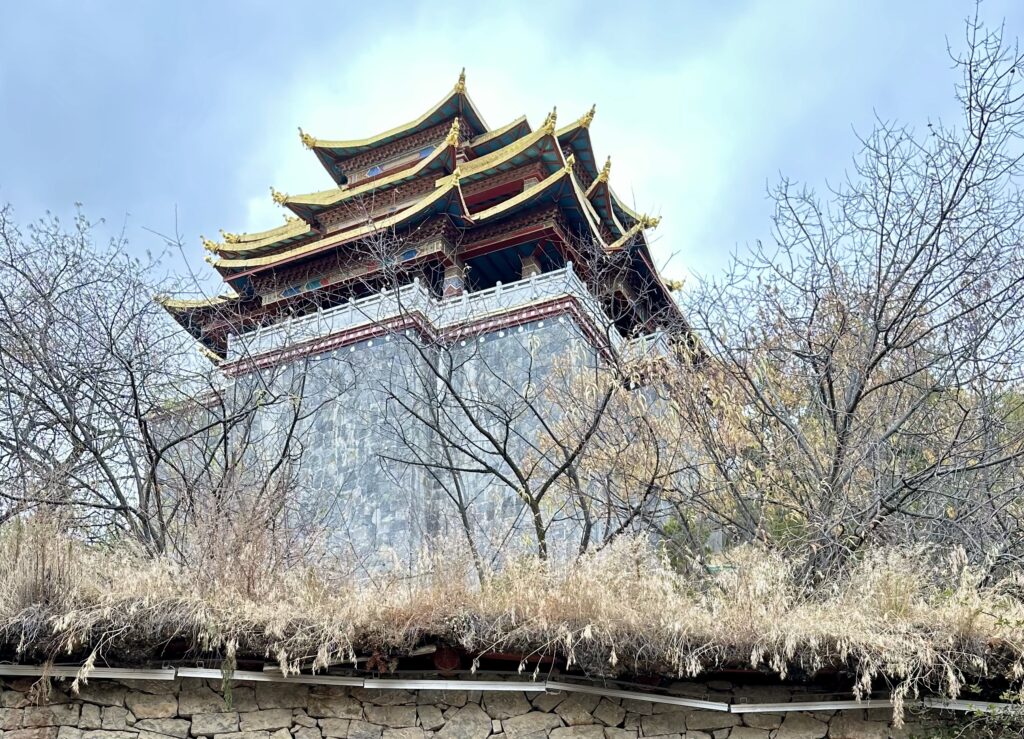
Tibetan Big Buddha Temple is a religious complex, situated at an elevation of 3300 metres atop Guishan Park (龟山公园) near Chaoyang Tower. It’s a functional place of worship with a large bronze Buddha statue
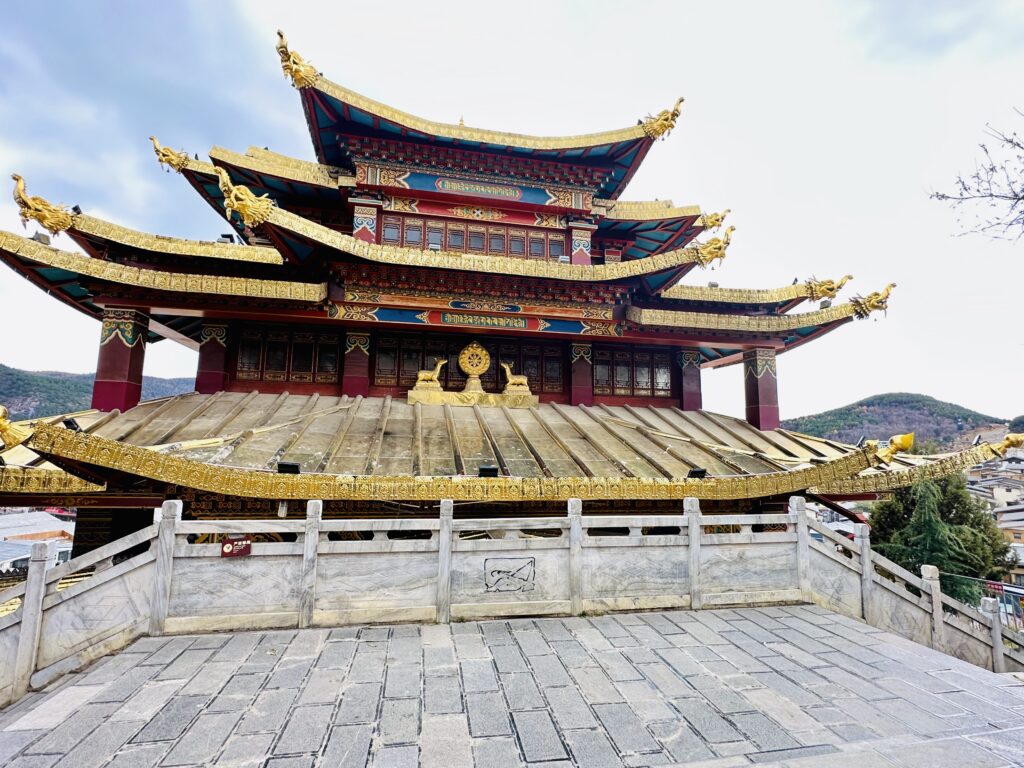
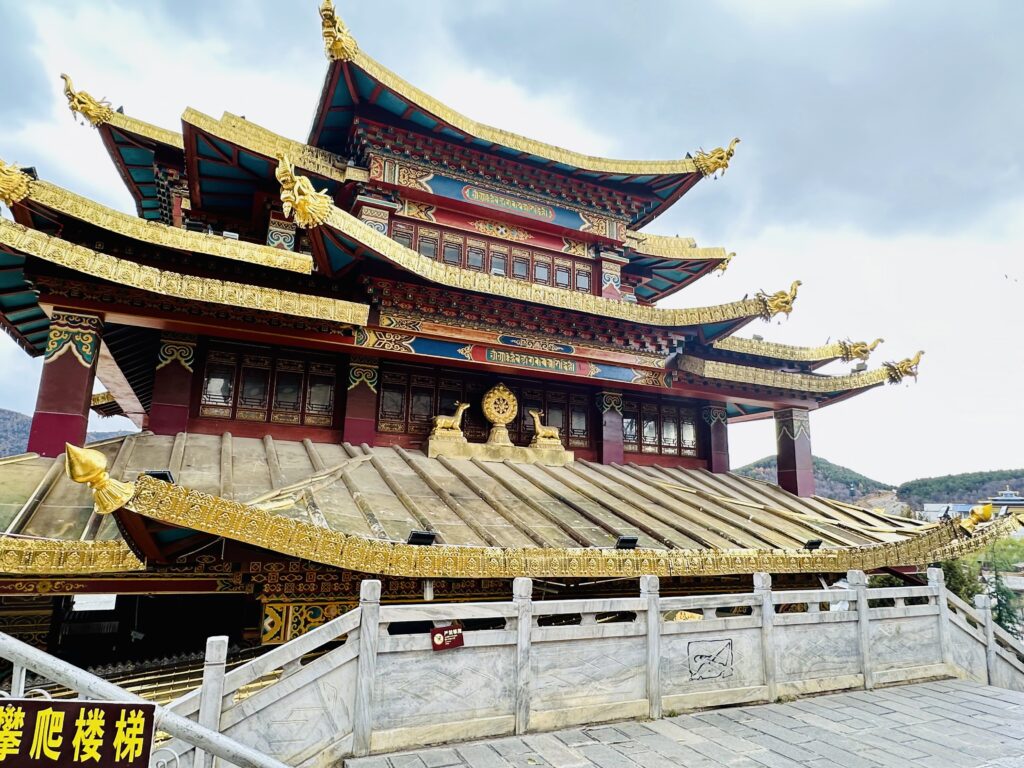
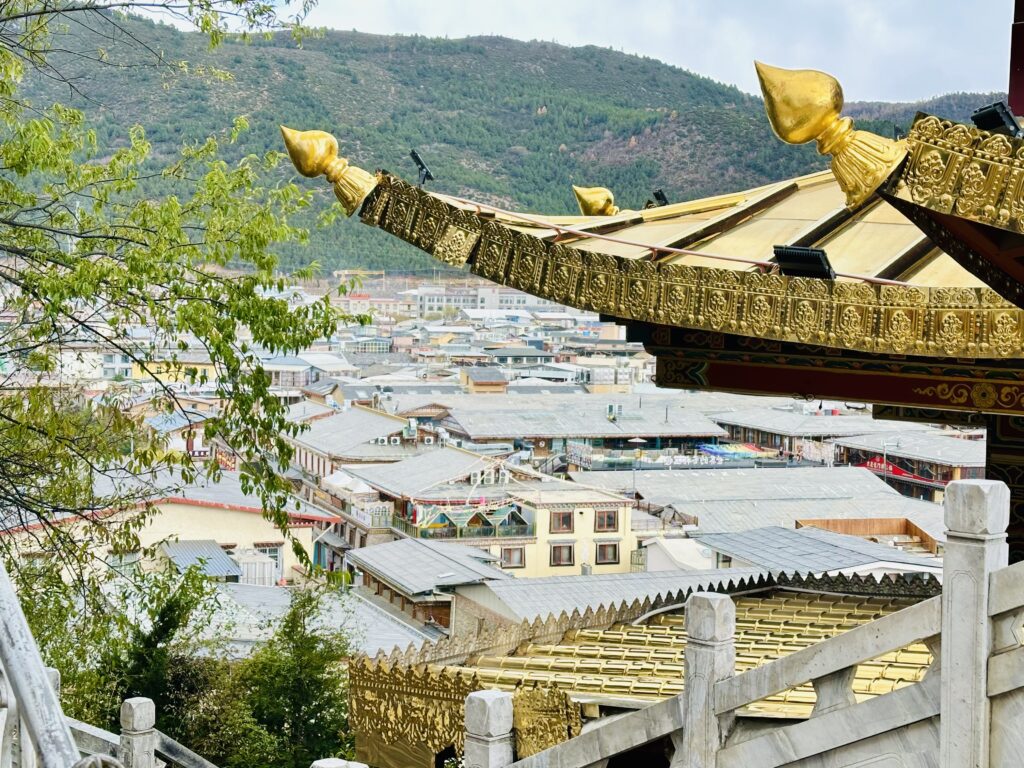
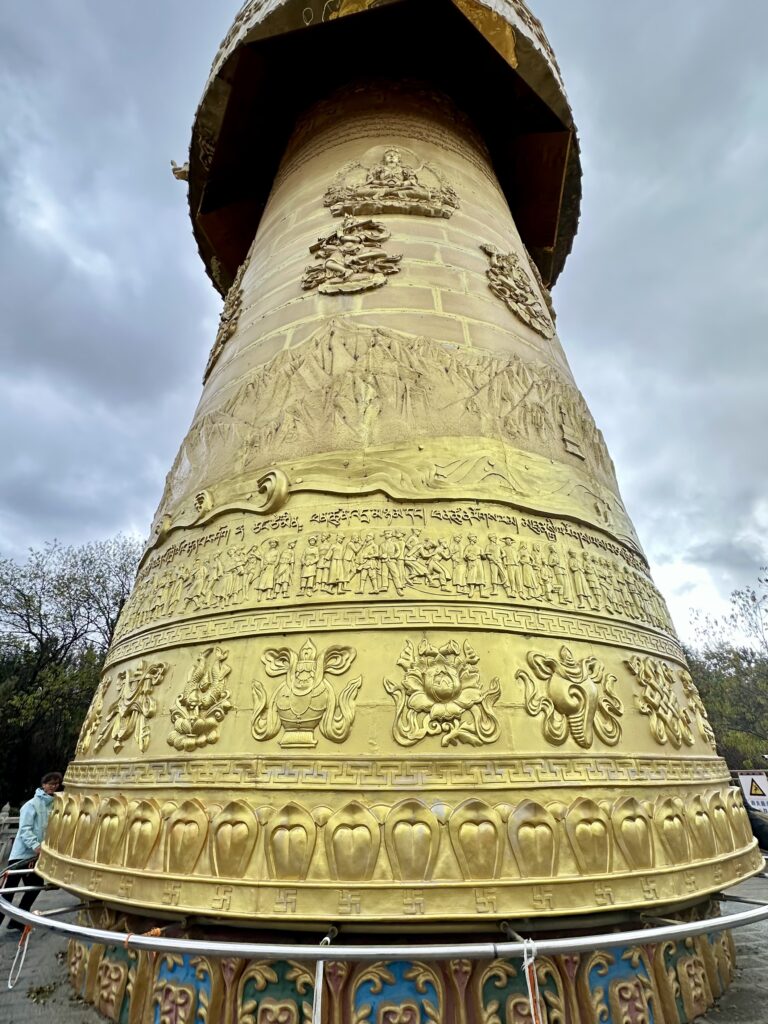
The Giant Prayer Wheel
The prayer wheel is an enormous, golden 24-metre-tall structure, the largest in the world. It is located near the Tibetan Big Buddha Temple atop Guishan Park . It can be spun clockwise for good luck, but it needed multiple people to move it at once due to its size and weight.
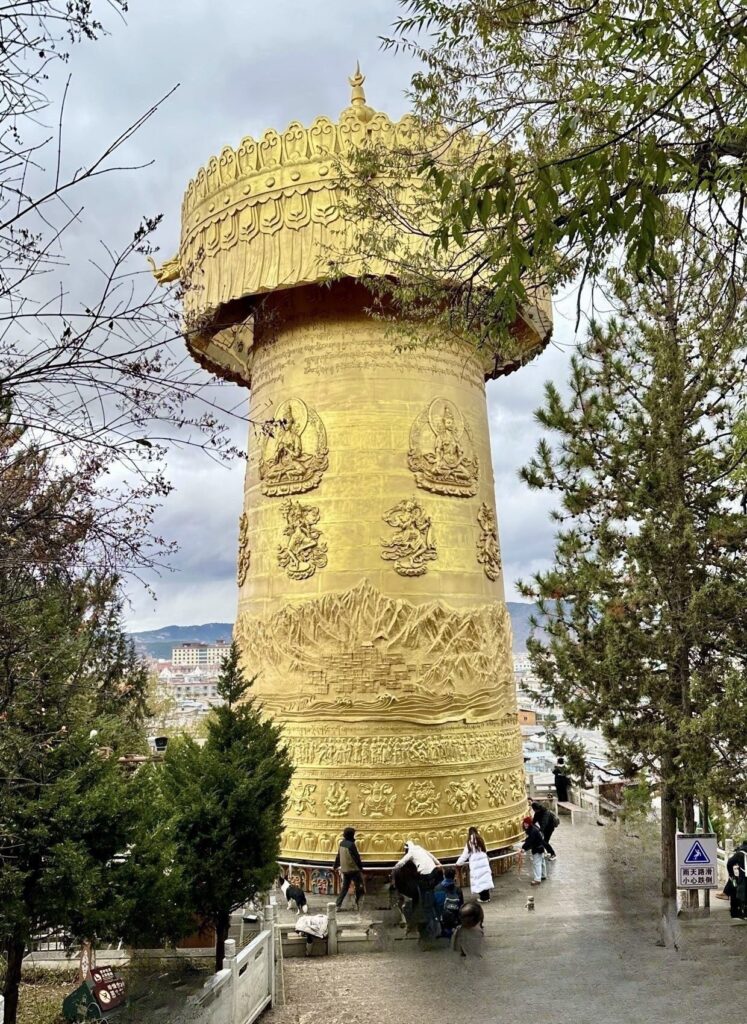
From the top of the park, the panoramic view of the town was stunning!
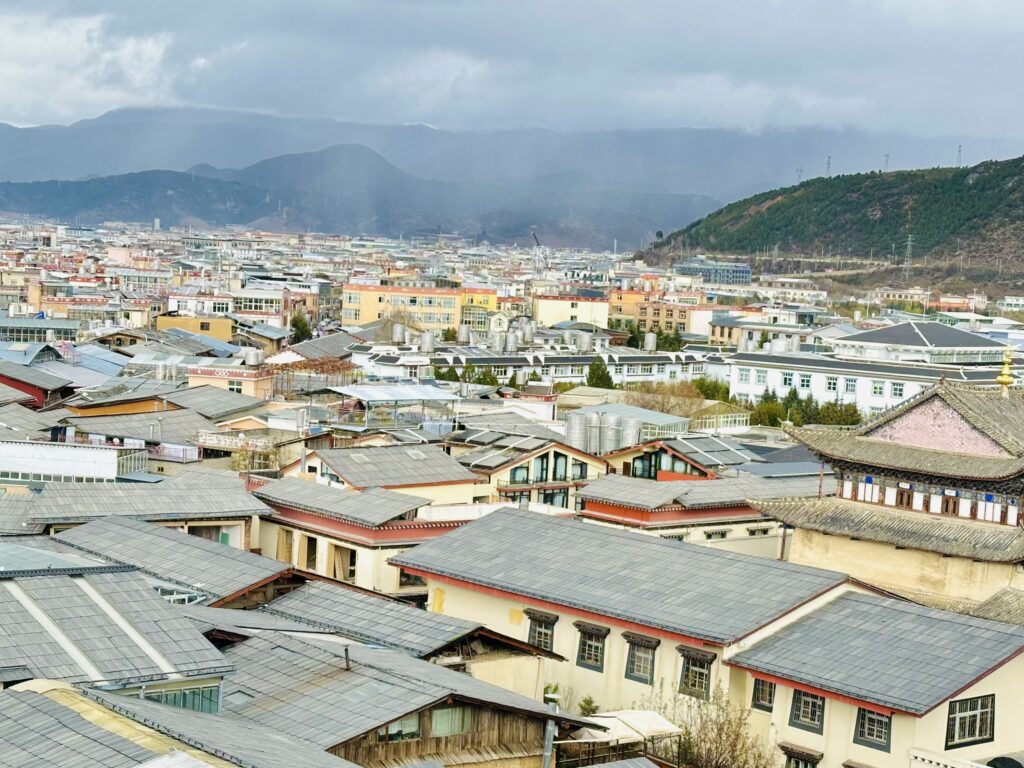
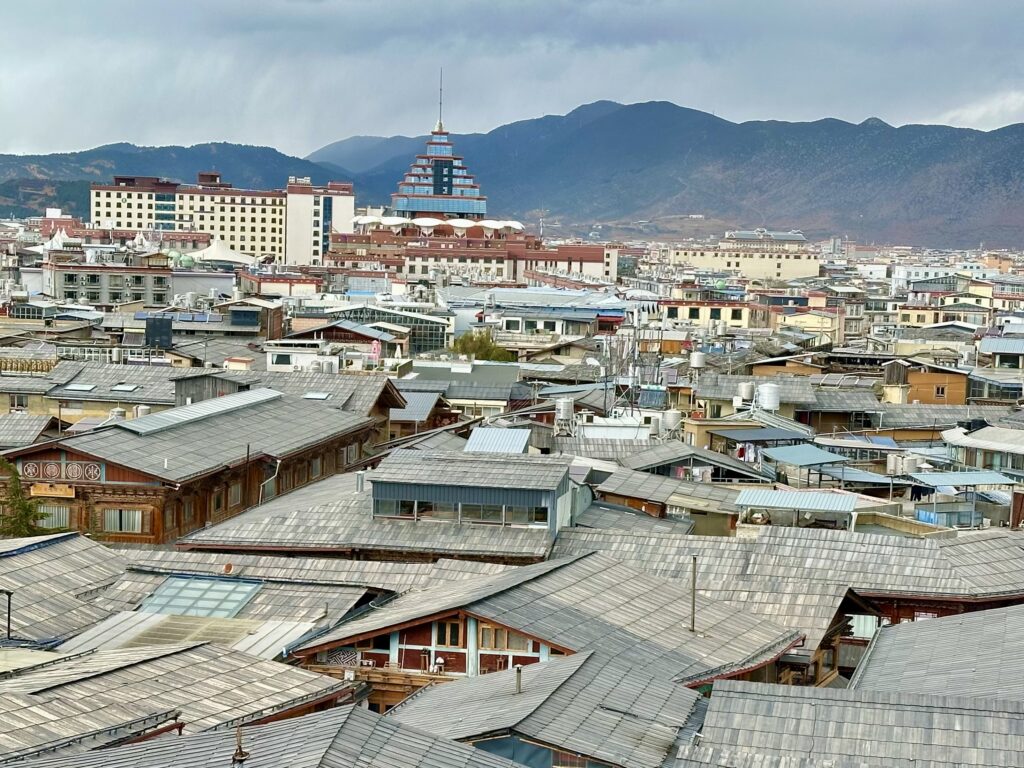
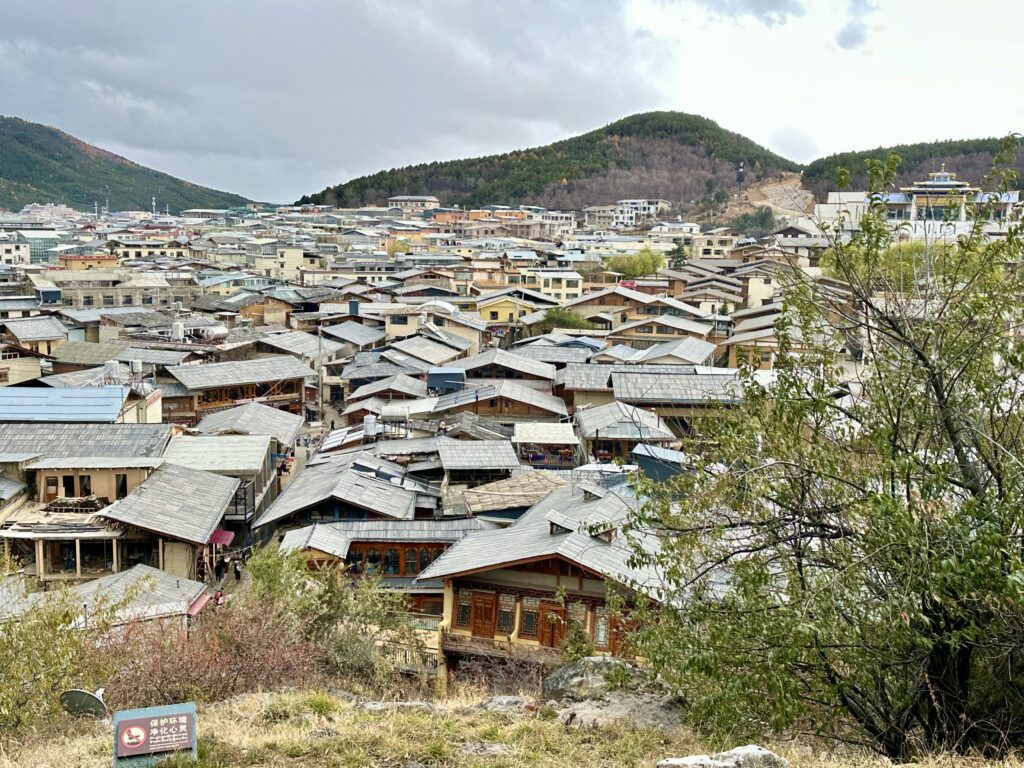
The cobblestone streets of this well-preserved Tibetan settlement with traditional wooden architecture were well worth the climb to see.
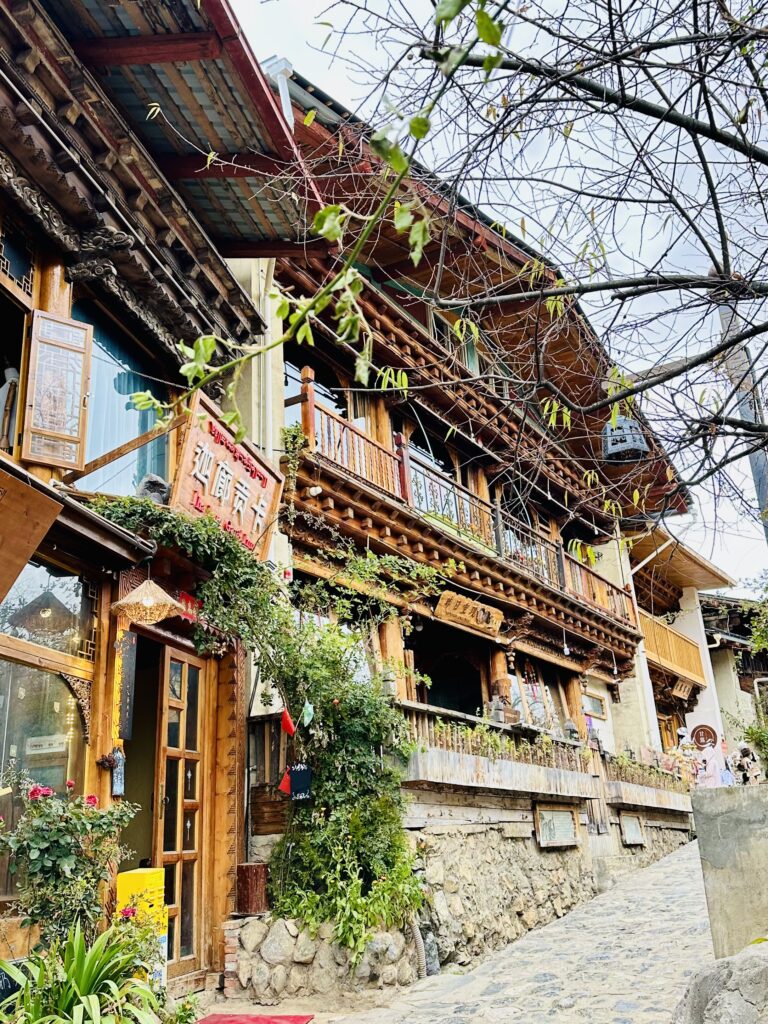
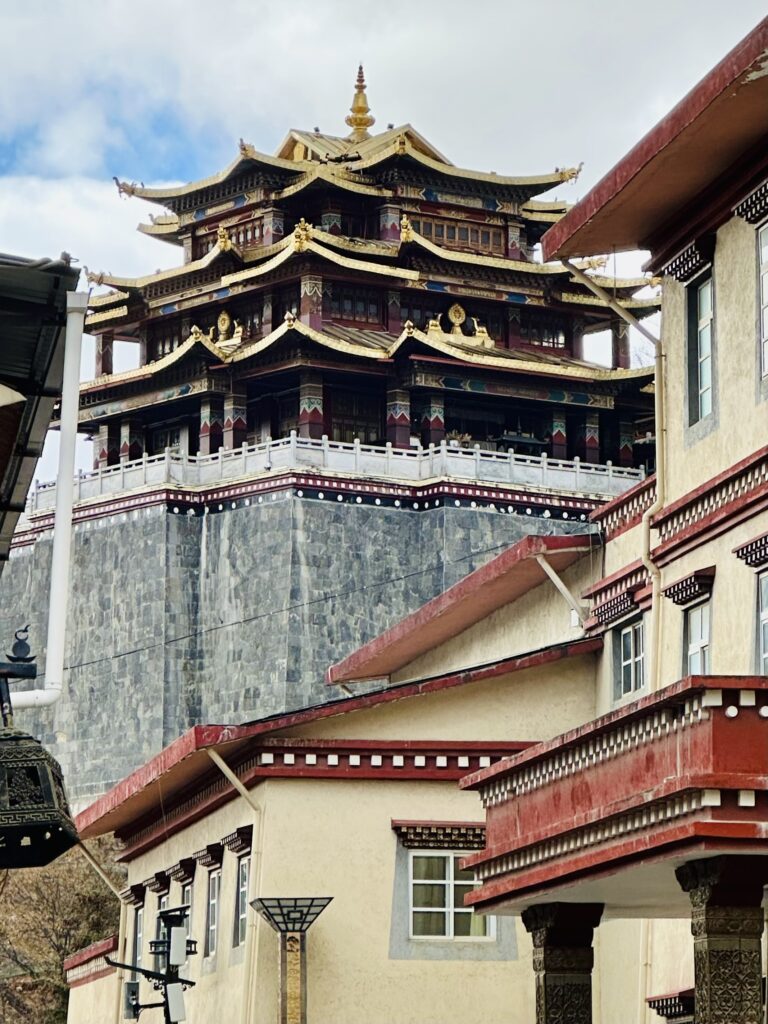
It was cold on the day of our visit, but I wouldn’t have missed it for the world just to experience the attitude and the culture! According to our driver it actually snowed the following day!
So after Kunming, Lijiang and Shangri-La, Dali awaited us….
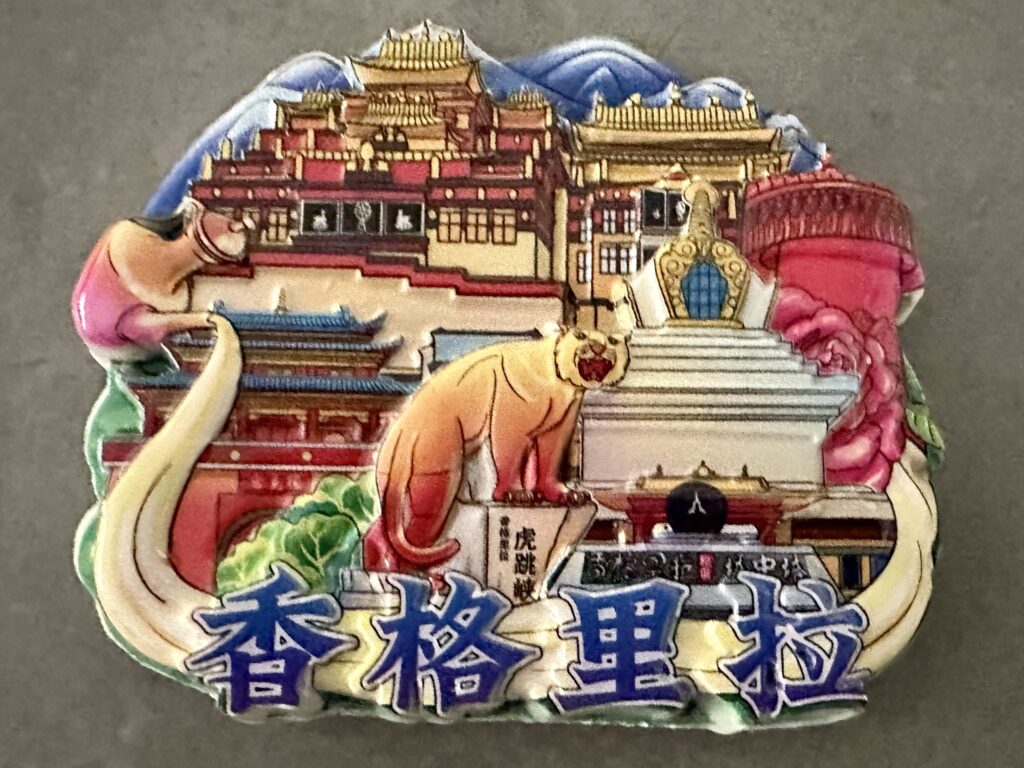
Meanwhile, I collected another fridge magnet! At this rate, I’d need a third magnet board to accommodate more!!